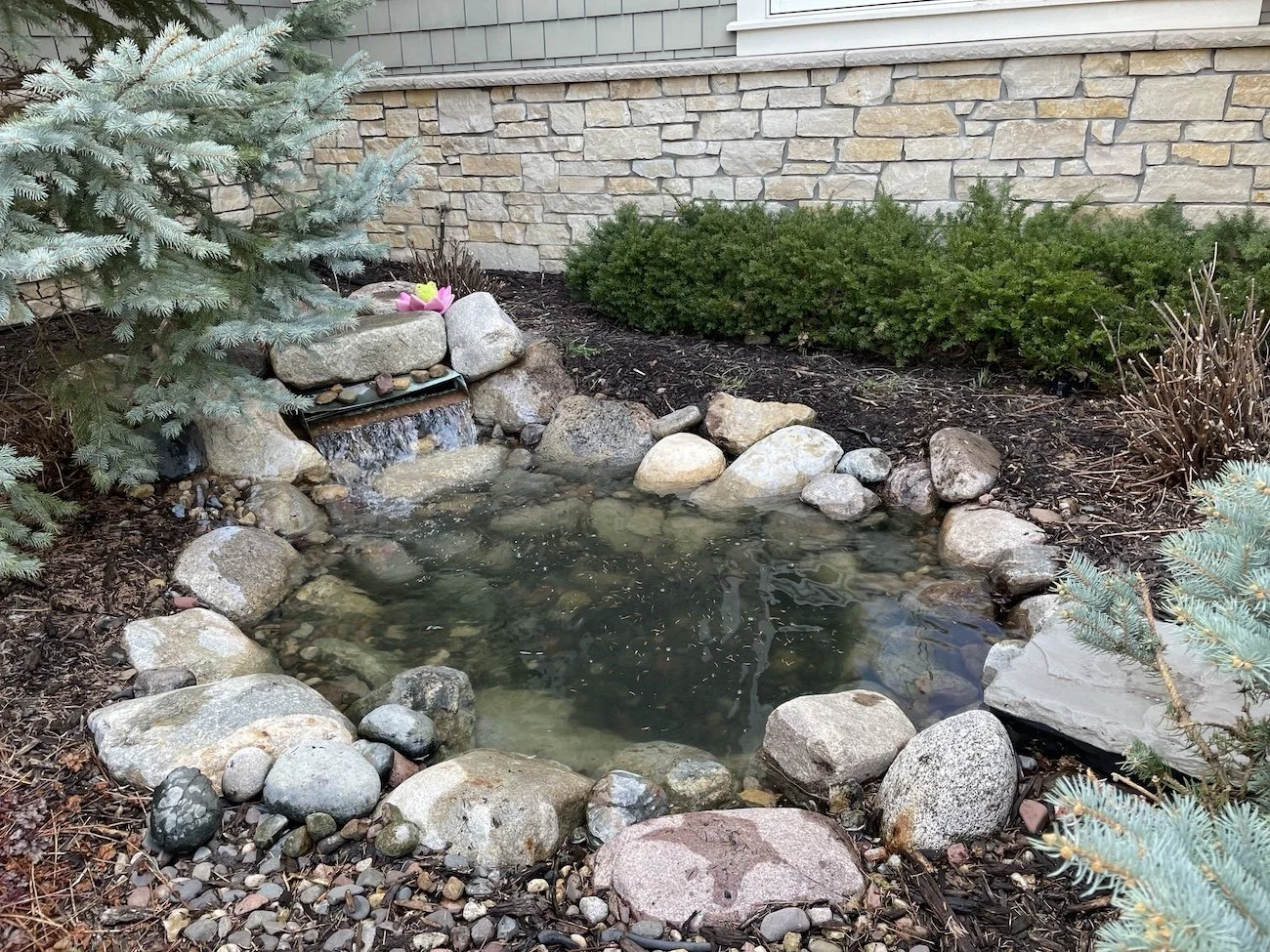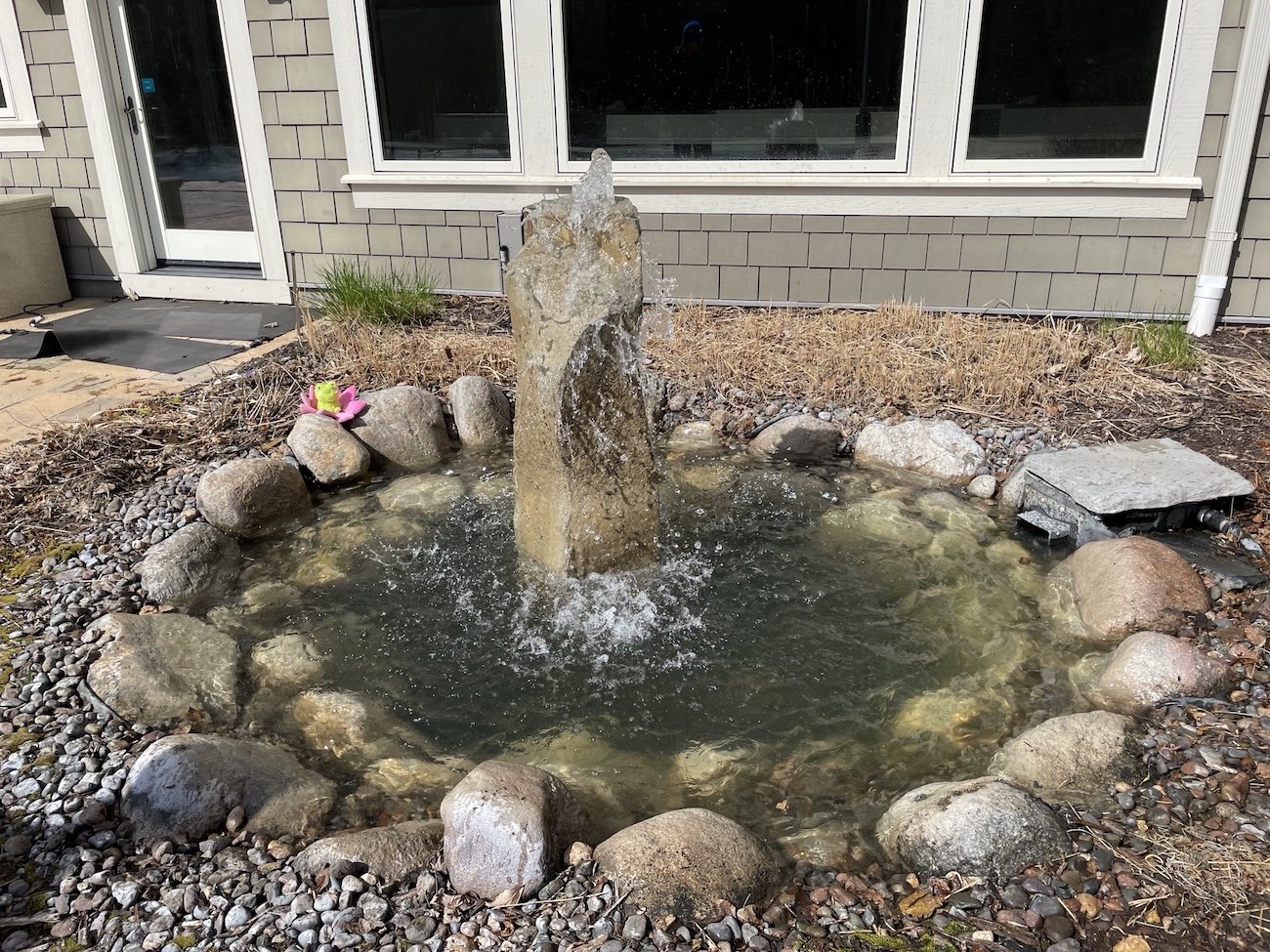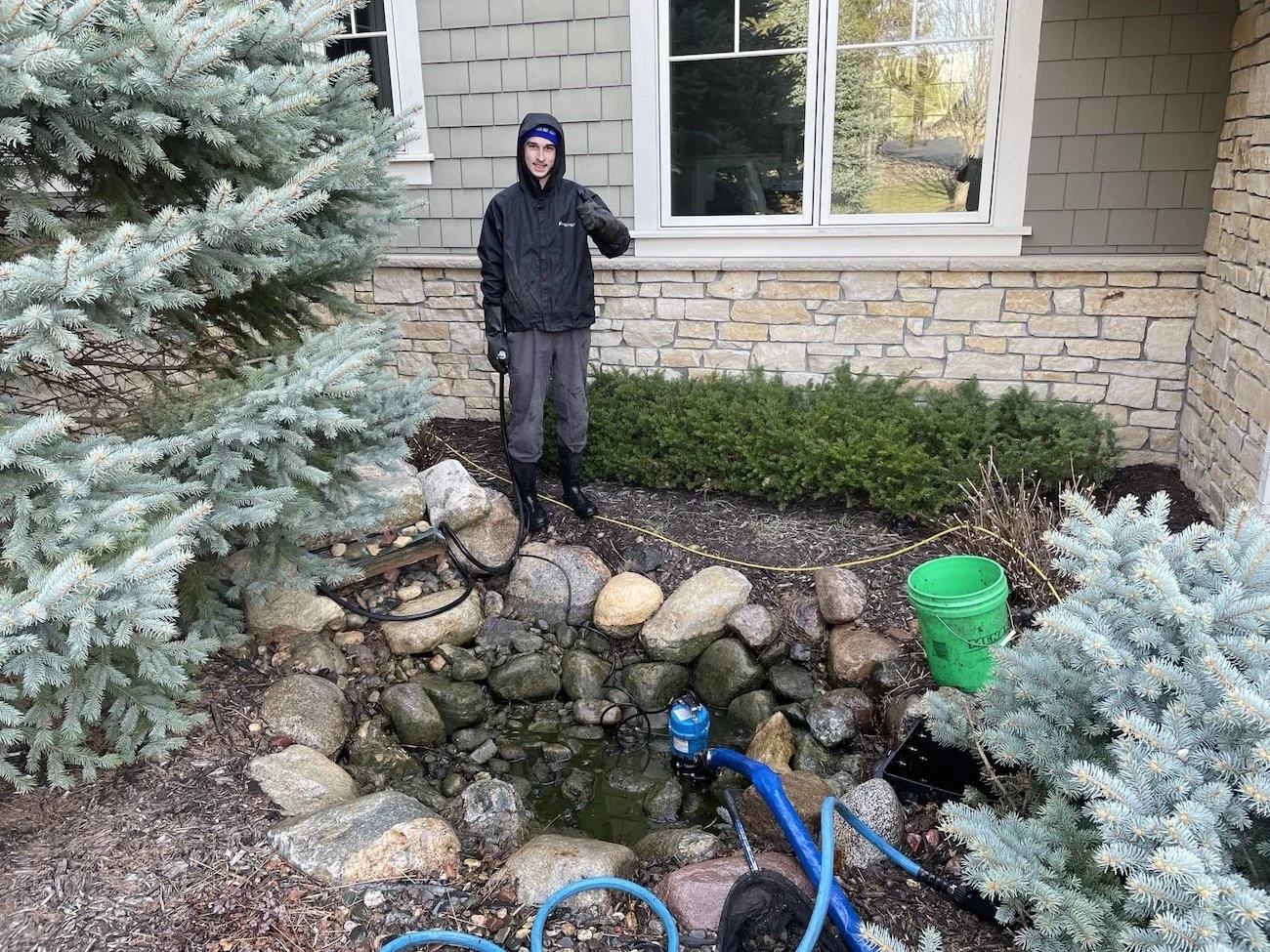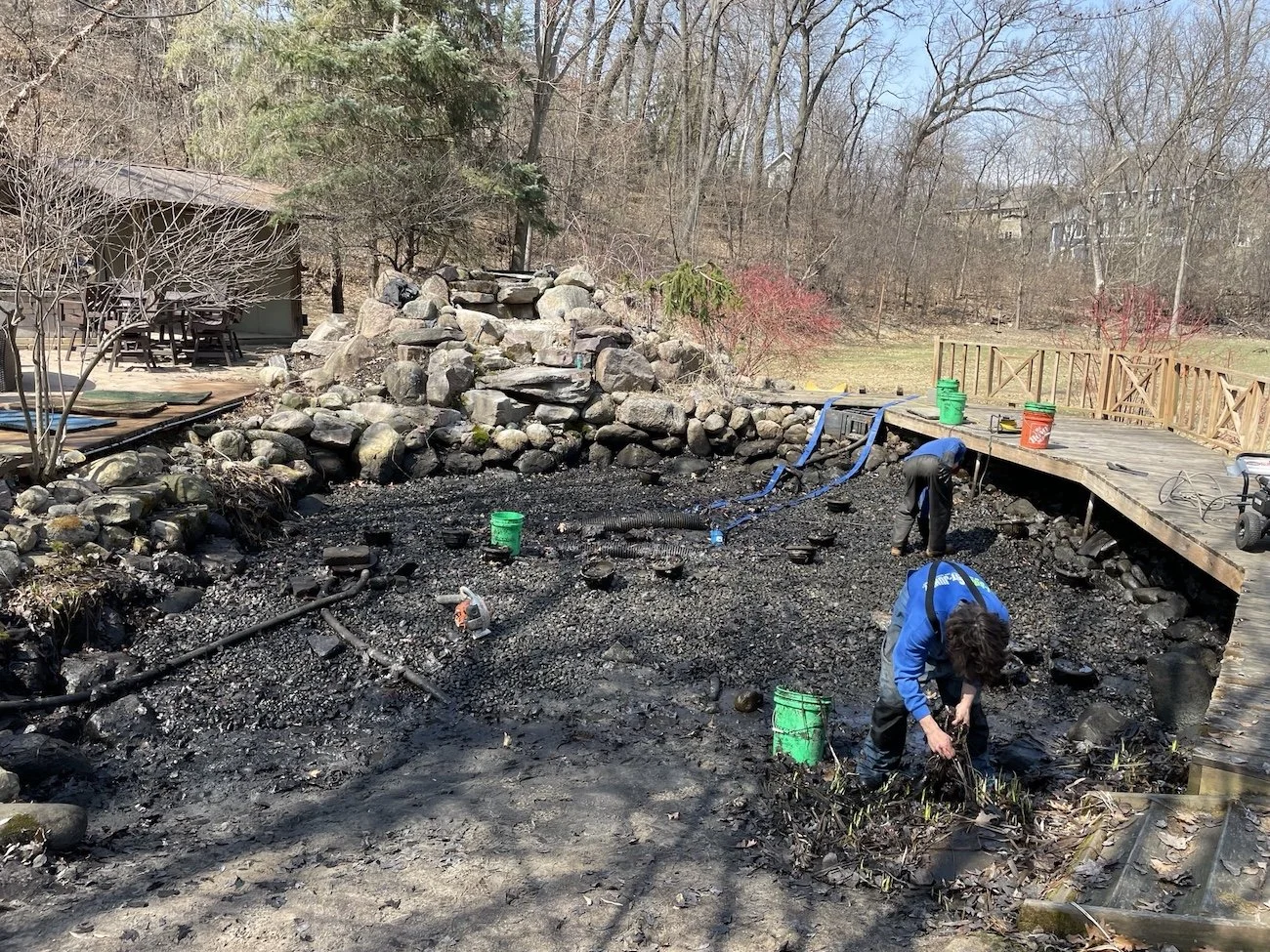
Building a pond water feature that’s aesthetically beautiful and functional takes proper design and installation. There is a lot to a pond water feature, and it’s a topic I could delve into the small details on for hours. But for the purpose of this blog, we’ll focus on the big elements. Before I continue, I’d like to mention a great resource for those with water features and for those looking to add one in the future. The Minnesota Water Garden Society, MWGS, is a club of water feature enthusiasts that meet monthly with amazing professional speakers. I’d encourage everyone to check them out (www.mwgs.org).
Water Feature Design and Placement
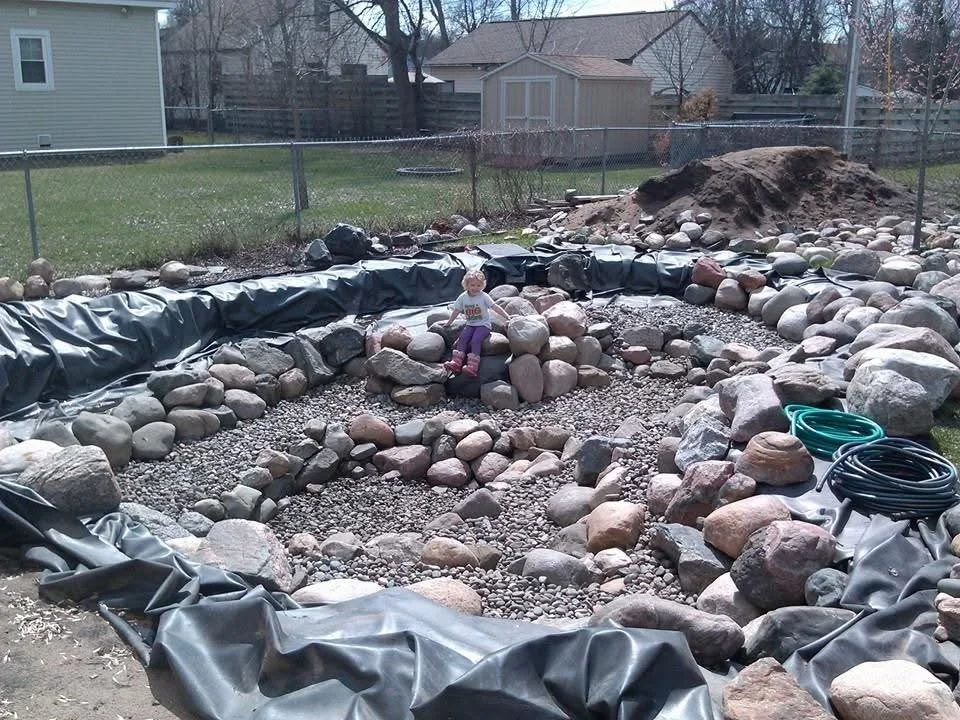
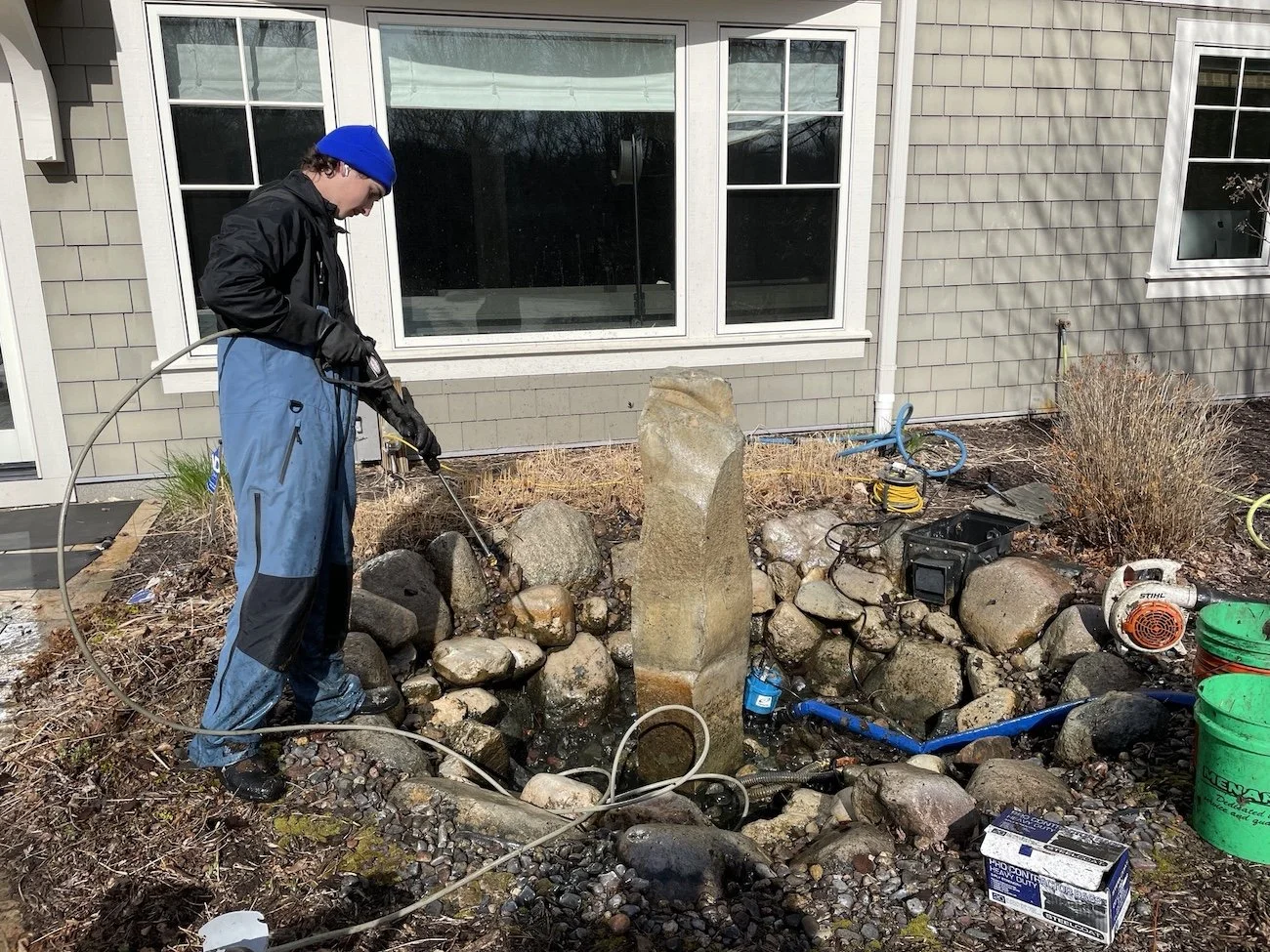
Ok, here we go. The first is to decide on the type of water feature and where to place it. Options of water features include fountains and statuary, pondless water features, ponds, and rec ponds. There really is no right or wrong, simply what you like and how you envision it is complementing your yard. For this blog, we’ll go with selecting a pond water feature. The next step is where to place it. I like to encourage the homeowner to give thought on sight lines from house windows, decks, patios and so forth. This increases the enjoyment of the pond even when you’re not right next to it.
Great. The style of the water feature pond and location has been selected. Now to determine the size. I’ve had great success with using a garden hose as way to layout the pond. This works well because the shape of the pond and size can be easily changed and it provides fantastic visuals. Take this for what it’s worth: I’ve never had a client regret making the pond too big, but plenty wish it was bigger years later. So, I tend to encourage homeowners to go big.
Mark The Utility Lines
STOP. Before going any further call someone to mark your utility lines. In Minnesota, Gopher State One Call is my recommended option. This is a free service that will come out and mark all the utilities in the project area. Do this approximately 1 week prior to digging. Never skip this step. It may save your life.
Dig The Pond
It's time to start digging! Depending on the size of the pond, the soil and if you have a strong back and a lot of motivation you can certainly hand dig the pond. It’s amazing what a shovel, wheelbarrow and floodlights can accomplish. In fact, that’s what I did on my personal pond when I built it 11 years ago. Now, I was motivated, in great shape, dealing with sand and quite frugal. But when we build a client’s pond, we typically use an excavator.
A couple notes on the excavation. If fish are desired, we recommend making the depth of pond approximately 3.5’, this will help keep the temps cooler and help winter over the fish. Then, we carve ledges to go into the pond. This allows for easy access in and out of the pond. Ledges also make rocking the pond easier and provide great areas for future plantings. A typical ledge is approximately two feet high and two feet wide. The soil excavated in the pond is repurposed for the headwaters, ideally none of the removed soil is hauled away.
Construct Pond Structure
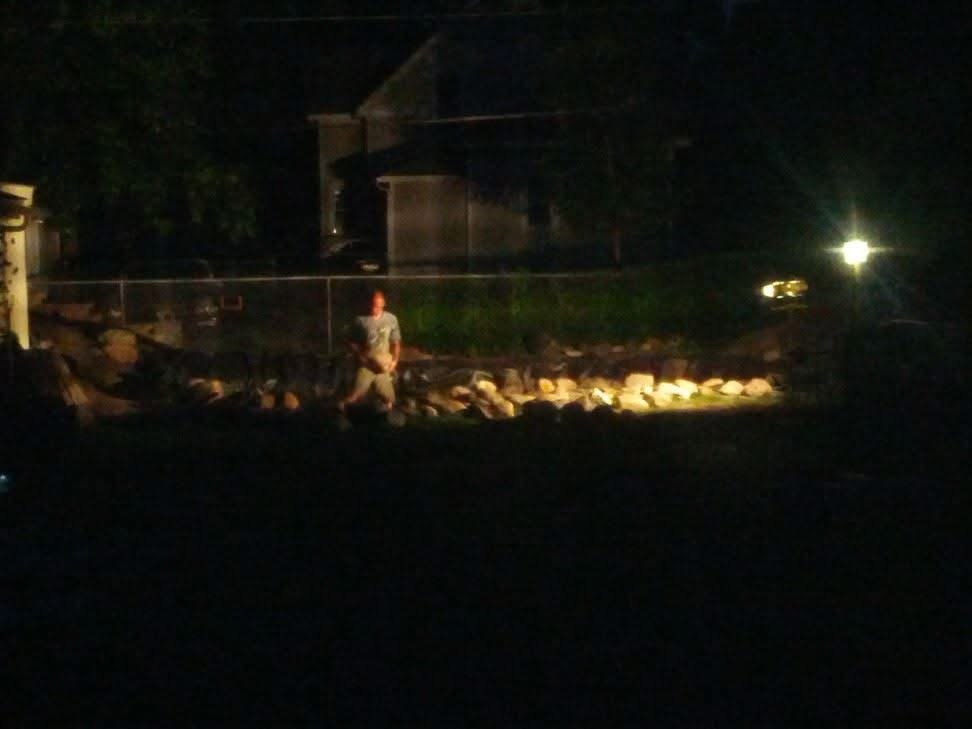
A hill/berm is built up at the headwaters where the waterfalls and stream(s) will be located. We then construct a Natural Filtration System or Up Flow Bog as the main source of filtration. A Natural Filtration System uses space fillers, called Rescubes or Aquablocks, rocks of different sizes and annual aquatic plants to filter the water. The roots from plants use nitrogen in the water to grow, creating a functional ecosystem. To learn more about Natural Filtration Systems, check out this YouTube video.
Streams are carved giving a great deal of thought on future rock placement. We typically select and measure boulders, then we dig “rock pockets” for them to be placed a bit. The next step is to place underlayment in the pond, stream and Natural Filtration System. Underlayment is a thick felt that protects the liner from anything sharp in the soil. The industry standard is 45 mil EPDM rubber liner, and no other liner should ever be used. Depending on the size of the pond you may need an additional helper or two to help you install the liner, this is due to its heavy weight. A couple of suggestions on laying the liner. Have at least one foot liner along the sides of the pond, stream and Natural Filtration System. Excessive liner can be cut once the installation, including rocking, is completed. If more than one piece of liner is needed make sure to overlap the liner at a drop, like a shingle on a roof. The overlapping will ensure no leak will take place and there won’t be a need to seam the liners together.
A skimmer box and hose are then installed. A skimmer box should be placed opposite the waterfall along the side of the pond. This placement will maximize the skimming function of the skimmer and prevent dead, non-circulated, areas in the pond. The size of the pump is determined by the volume of water in the pond. A good rule of thumb is to turn the water in the pond over once every hour, so if the pond holds 6,000 gallons your pump should be 6,000 gph. If the pump is 6,000 gph or less, you can use 2” flex pvc hose. However, if the gph exceeds 6,000 the hose size will need to be 3” in diameter. Id’s say 95% of the water features we build, and service use 2” diameter hose.
Place Rocks
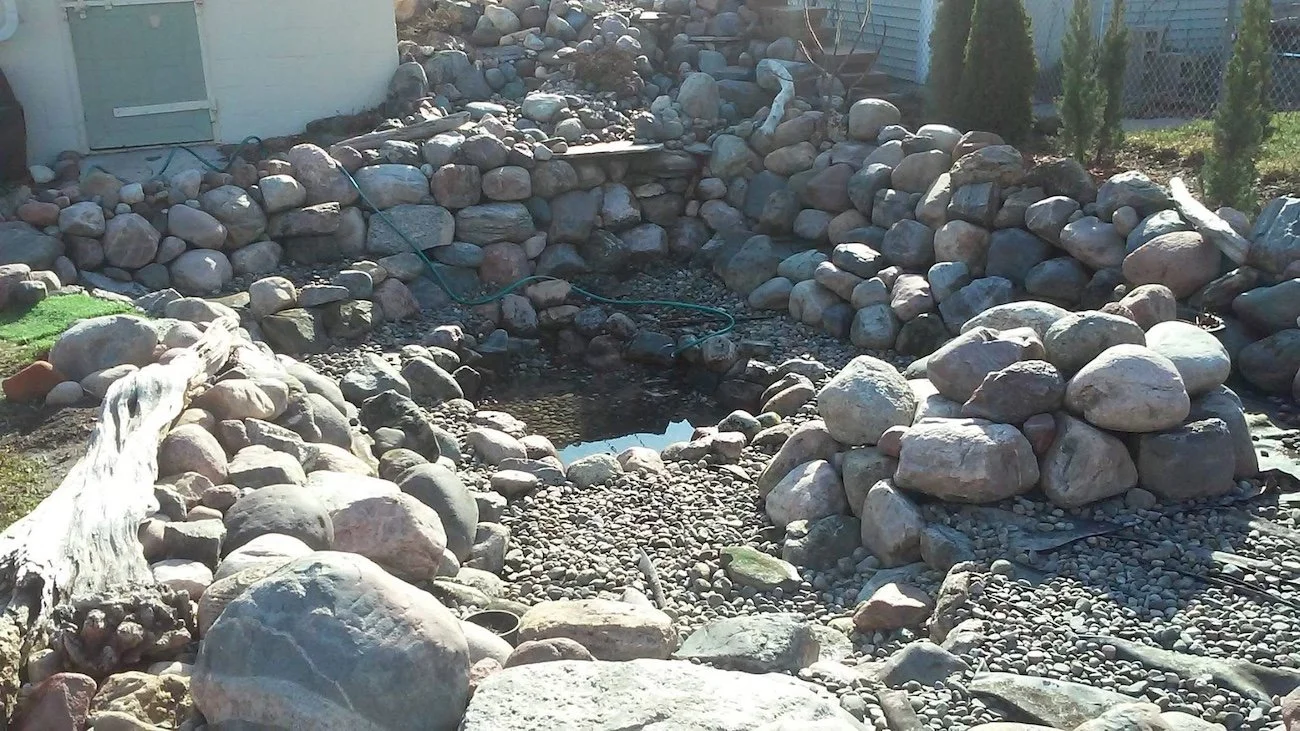
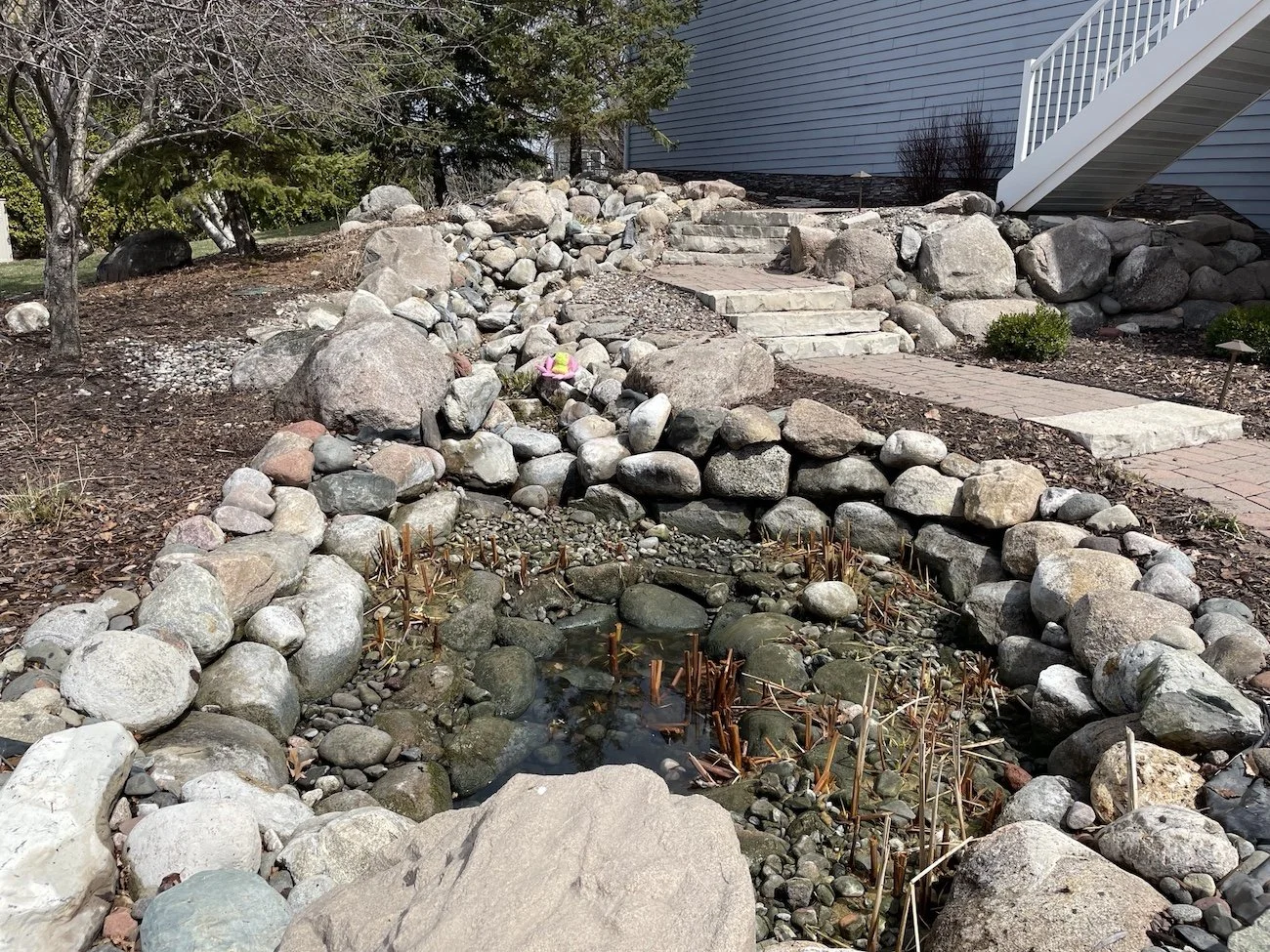
Now the fun really begins! Time to start rocking. A bit of a geology lesson: 10,000 years ago, the last Ice Age was ending. As the glaciers retreated, glaciers scooped up the rocks and boulders and redistributed them all over where Iowa, Minnesota, Wisconsin and Michigan are now. Therefore, the Midwest has an abundance of relatively beautiful and cheap glacier fieldstone. These rocks and boulders come in variety of sizes, shapes and colors and are often a great choice for a Minnesota pond water feature. There are plenty of other rock options, so it’s always a great idea to visit your local rock yard to select what you like. They may even allow you to mark specific “special” boulders you like to be part of the rock delivery as well.
A couple of notes on rocking your water feature. Think of rocking your water feature as completing a puzzle. Fit the rocks together and give a lot of thought to mimic rocks in nature. Use smaller rocks in the gaps of the boulders to lock them in place. If the boulders are too large to be placed by hand, they will need to be safely brought in with a tow strap and an excavator. There are great videos on YouTube that show this process; however, if the boulders are too big to be brought in by hand, I’d suggest hiring a professional. If the boulder is sharp or very heavy, place a piece of underlayment or liner for extra protection.
To direct water flow over the waterfall drops in the stream use waterfall spray foam, this expands so don’t over foam. However, the foam can be cut with a sharp razor blade or knife once fully tried.
Add Plants
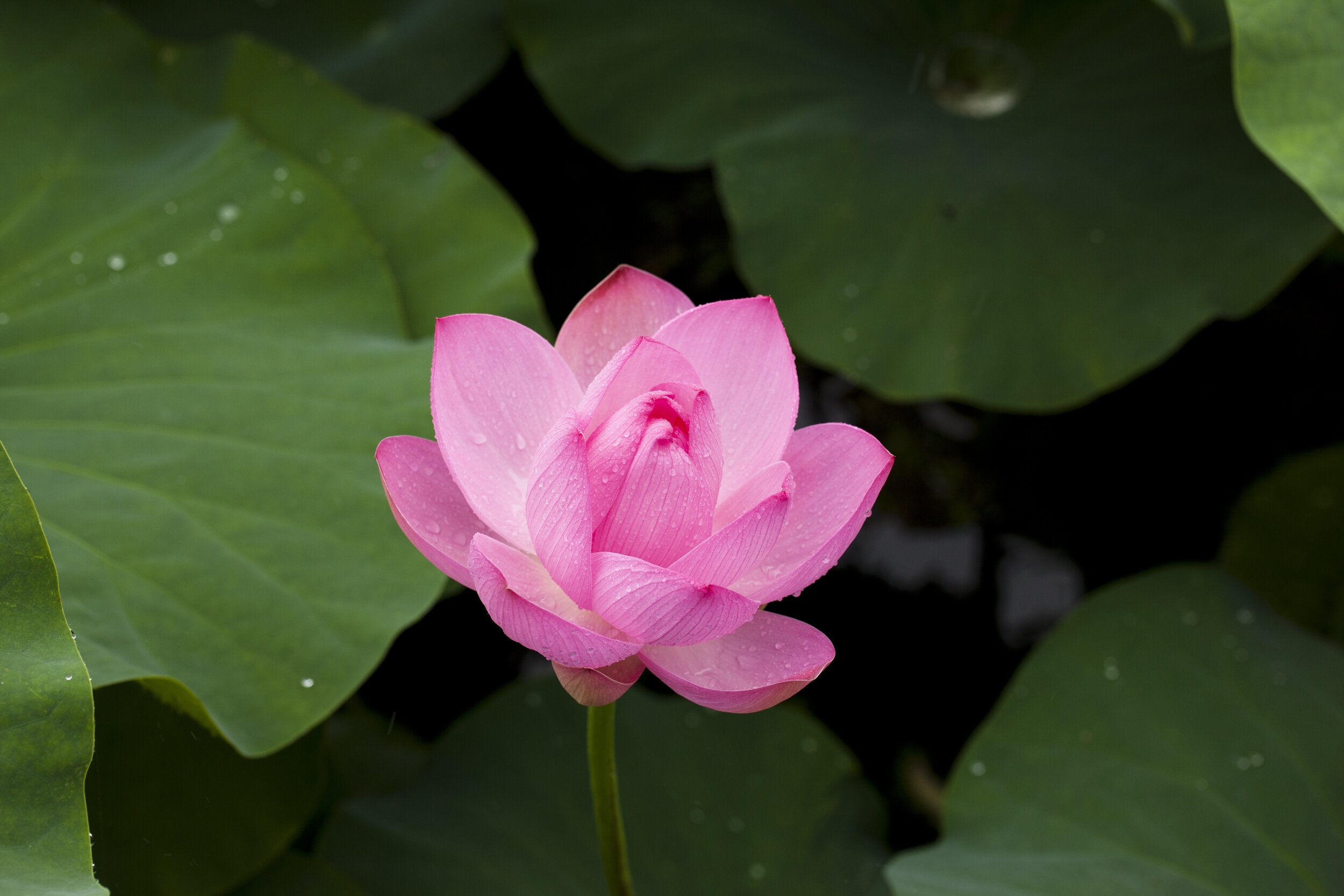
Once the pond water feature is complete it’s time to add plants. The Natural Filtration System can be planted with annual aquatic plants like ornamental cattails, water celery, water iris, arrowhead and so much more. In the pond itself consider water lilies, bog bean, sweet flag (I keep mine in pots due to fast spreading), and lotus.
Add the Details
Lastly, some details to add to your pond water feature include a fish cave, lighting, driftwood and peripheral plantings. Plantings along the edges of the water feature, especially plants that spread over the rocks, help to soften the heavy rock look of a newly built water feature.
We love designing and building water features, and we take a lot of pride in constructing water features that work for each of our clients. We’ve built Japanese koi ponds with floating rock bridges and tea houses to large duck ponds and ponds to swim in. So, if you can dream it it can be built. Time to turn that dream into a reality!