Why is My Pond Water Green?

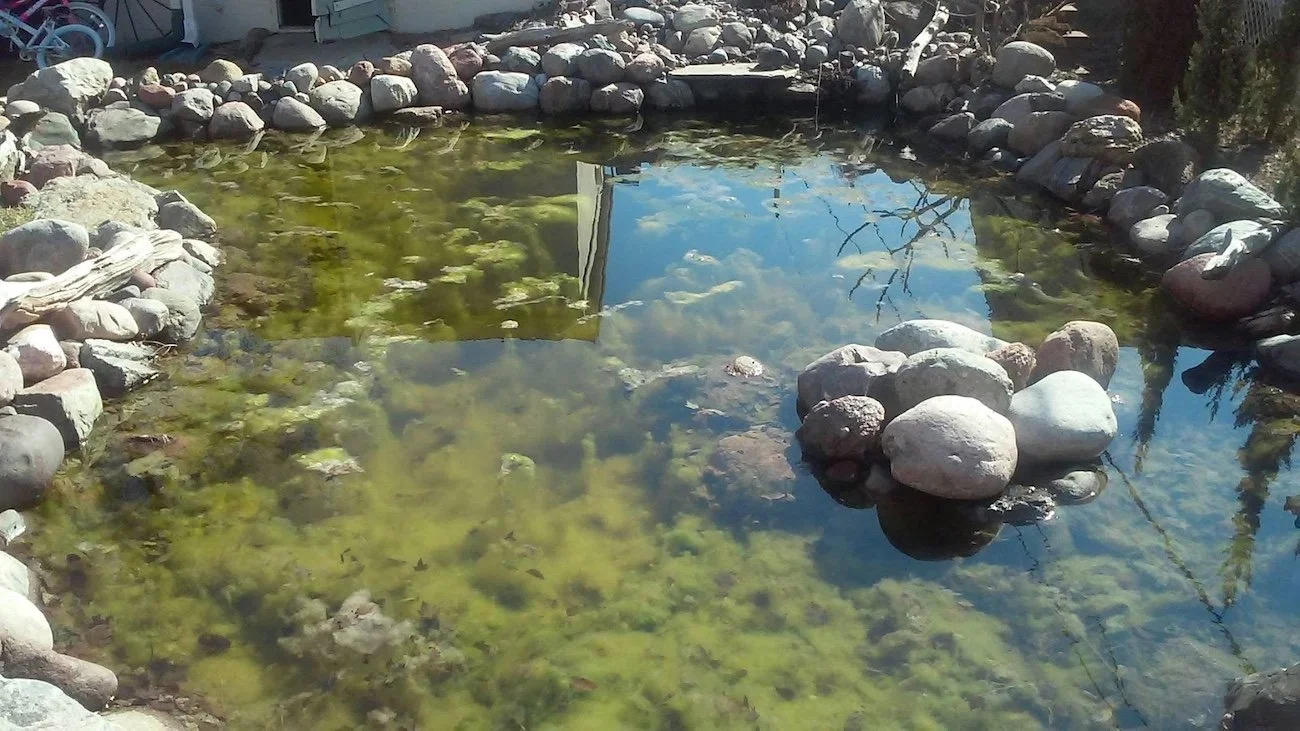
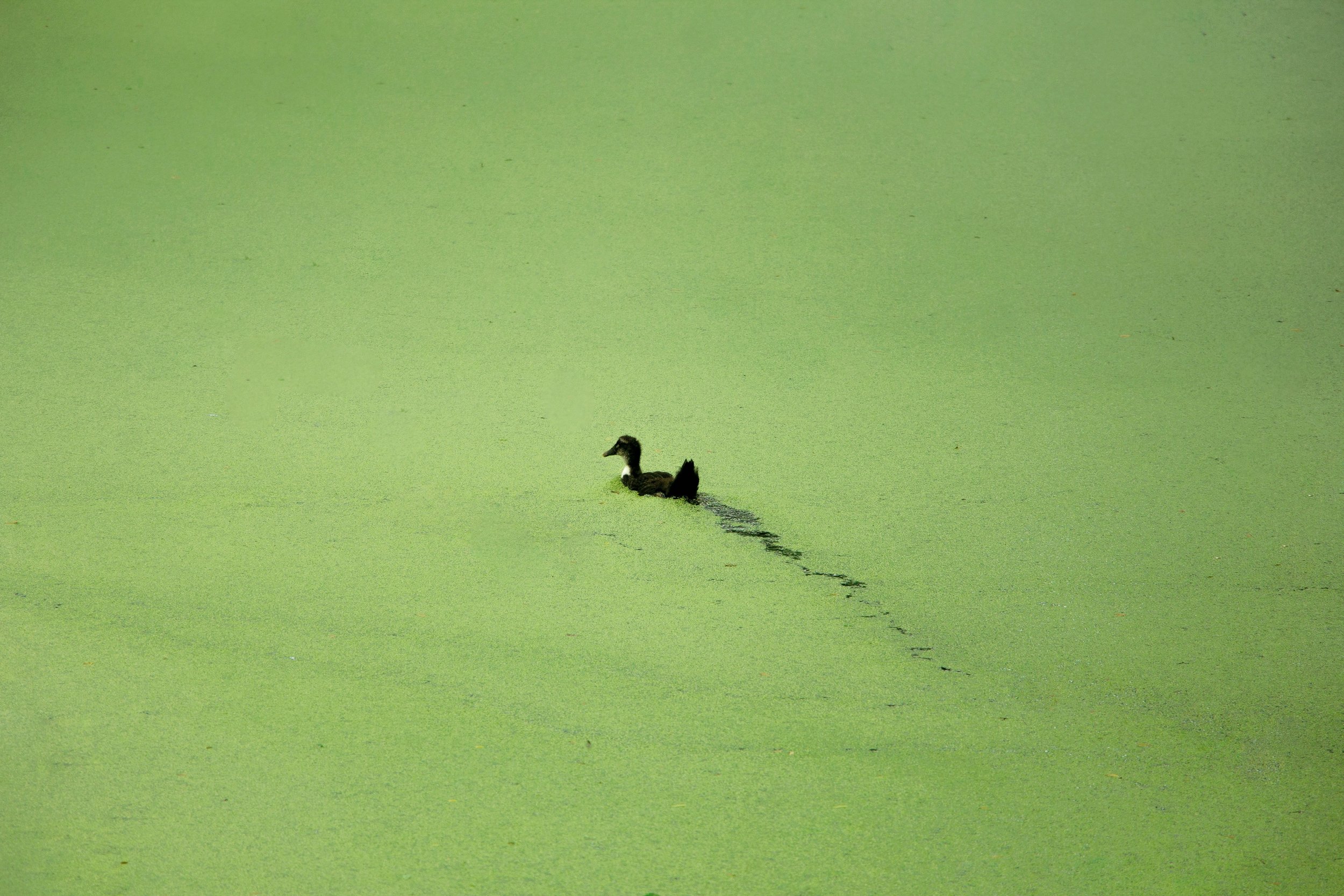
An annual struggle happens nearly every year for a large portion of pond owners. The dreaded “green water” and string algae. This is most common in sun facing ponds in the hot months of July & August. Green water caused by an overgrowth of microscopic algae, called an algae bloom, which occurs when there are excess nutrients like nitrates and phosphates, along with sunlight and warm temperatures. Another way to explain this green water is that there is too much nitrogen in the water and something needs to grow. Without the proper plants, the pond provides its own solution. Algae grows because something needs to “eat” this abundance of nitrogen and bring balance to the pond.

Poor Water Filtration

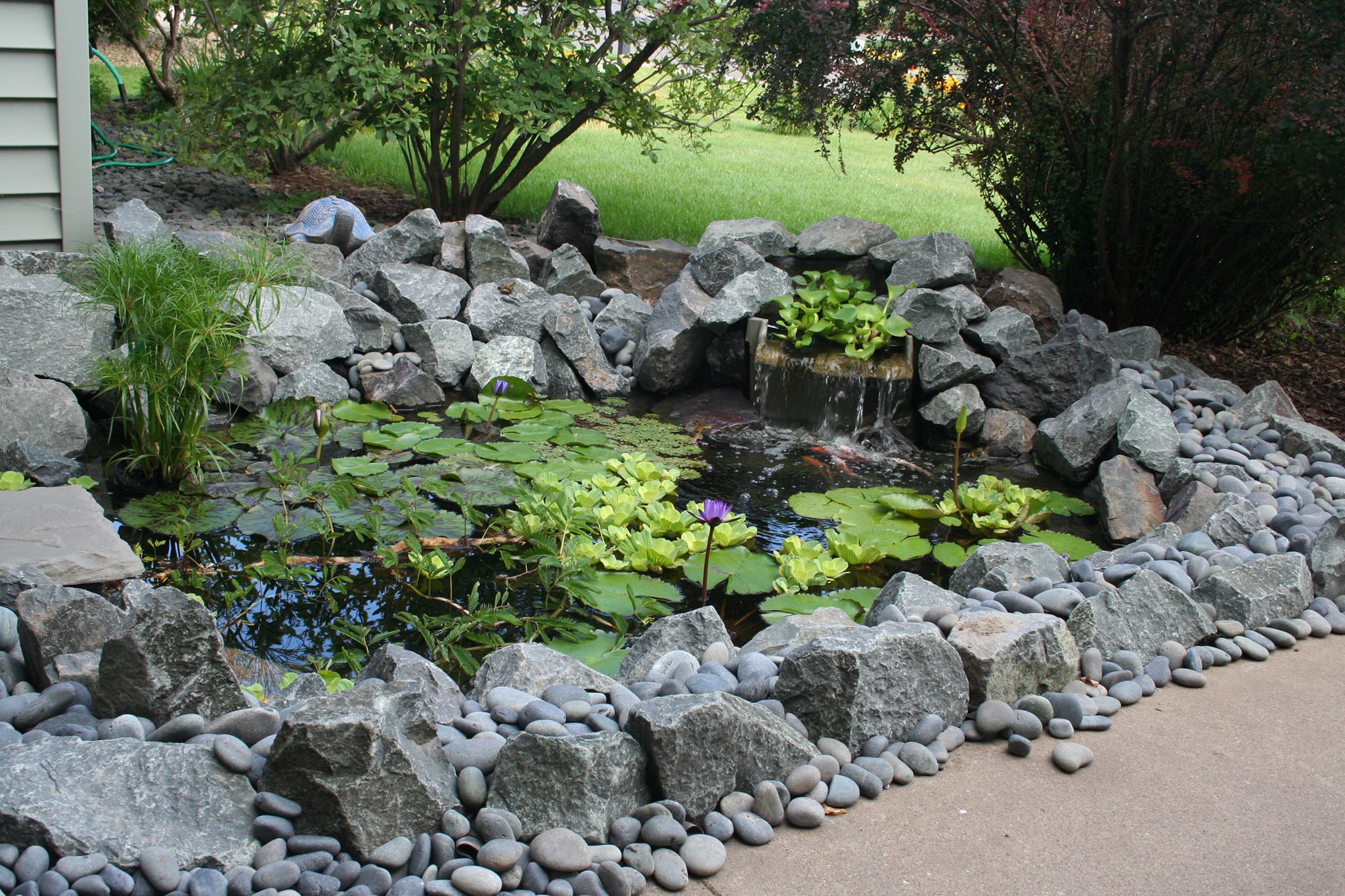
The solution to removing the green in your pond’s water is proper filtration and plants. I’m a huge believer in Natural Filtration Systems, which are also called Up Flow Bogs. Natural filtration filters the water in the pond by using different size rocks in the headwaters, where the water entering your pond is, to grow beneficial bacteria and annual pond plants to use the excess nitrogen. This system does take a couple of years to fully establish itself as the plants are maturing, so a bit of patience is required. Examples of great plants for a Natural Filtration System include ornamental cattails, water iris and water celery. Great aquatic oxygenating plants include water lilies, bog bean, sweet flag (I keep mine in pots because they spread fast), water iris, hyacinth, water lettuce, arrowhead, and so much more.

 
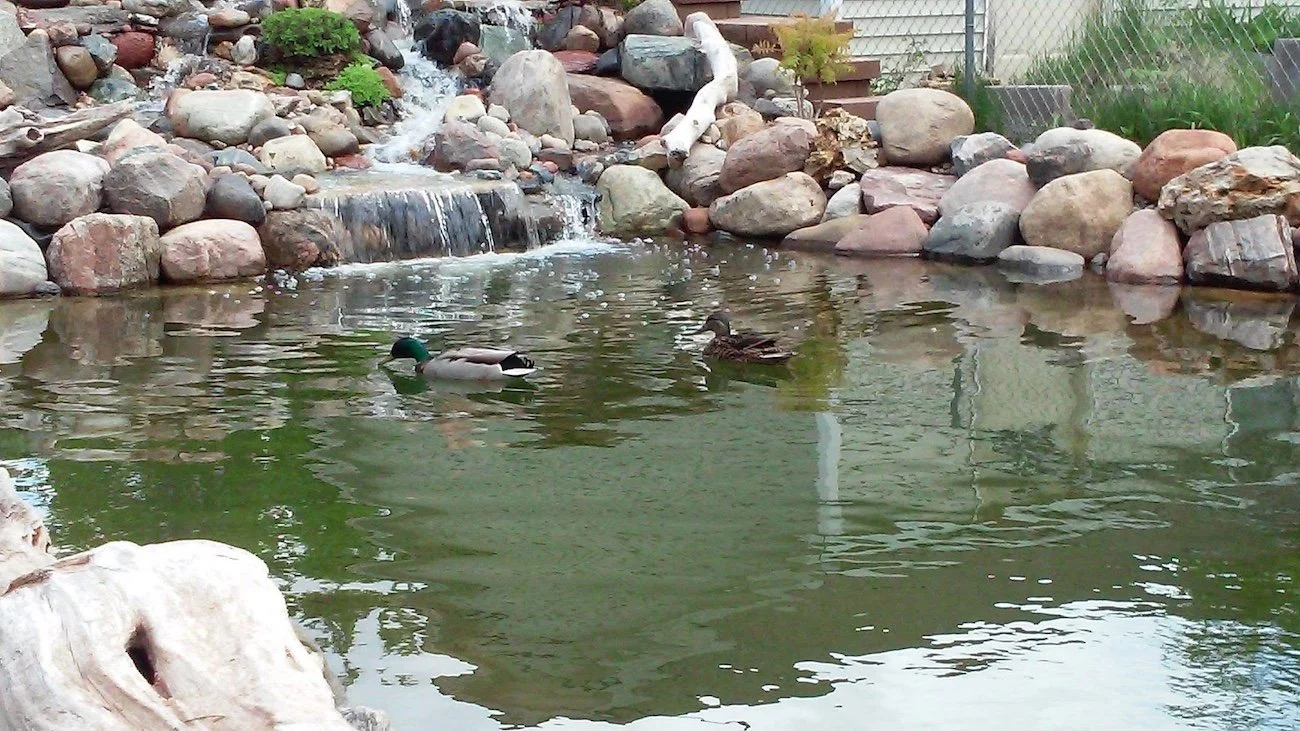
Pond with Green Water why is my pond water green
 

Incorrectly Sized Pump

A fully planted and mature pond and Natural Filtration System is the key to great water clarity and health. However, there are other factors. When sizing a pump, a good rule of thumb is to turn the water in the pond over once every hour. For example, if the pond holds 6,000 gallons the pump should be 6,000 gph or more. In addition, if the pump is 6,000 gph or more you will need to increase the diameter of the hose from 2” to 3”.

Poorly Constructed Pond

A pond constructed too shallow will also increase the probability of green water. This is due to the pond temperature; we tend to construct ponds 3’ to 4’ deep to help keep the temps cooler. This depth will also help fish survive throughout our harsh Minnesota winters. Plants like lilies also provide shade to cool the water, providing an added benefit.

Our goal when designing and constructing a pond water feature is to mimic nature as much as possible and to use natural elements to bring the water feature into balance. We also add natural products, like barley, and beneficial bacteria to help the system. These treatments are 100% natural and safe for plants, fish, pets and people. As barley decomposes, it releases a compound that acts as an “algistat,” preventing green water and filamentous algae, and promotes healthier aquatic plants by reducing algal competition. You can also purchase liquid barley extract that is heavily concentrated and already broken down.

Mechanical Options to Prevent Green Water

There are two mechanical options to aid in the elimination of green water. The first is an aerator, which is a must for fish. In fact, I keep an aerator running yearlong in my personal pond to help oxygenate the water, keeping the water clear and my fish healthy and happy. The second mechanical option is a uv clarifier. A uv clarifier provides crystal-clear water by killing free-floating, single celled algae (the cause of “green water”) and some bacteria as water passes through, improving health for fish and plants, boosting filtration, and acting as preventative for disease outbreak.

Need some help with your algae problem? Contact us to get started with pond services for your backyard pond. We are happy to help get your pond looking great without you having to lift a finger.

Keys to Backyard Duck Ponds

Healthy Duck Ponds

We were fortunate enough to be selected to design and install a large duck pond in Clear Lake, MN in the summer of 2024. The three keys to a successful duck pond are filtration, filtration, filtration. Proper filtration starts with a robust Natural Filtration System. This system mimics nature, using layers of different sized rocks and plants to physically trap and biologically break down impurities, which results in clearer and healthier water.

Bacteria and fungi colonize the gravel in a Natural Filtration System, consuming organic waste and nutrients, while aquatic plants absorb the remaining nutrients.

 
Two ducks in a backyard pond built by DIWhy
 

Duck Care

Eight years ago, we adopted four baby ducks for the Summer. One mallard, two runners and one peaking enjoyed our private pond water feature. They were certainly living large and enjoying life. And boy, did I learn a lot about duck care. They may be cute, but they sure are messy, and they poop an awful lot.

four ducklings caring for duck ponds
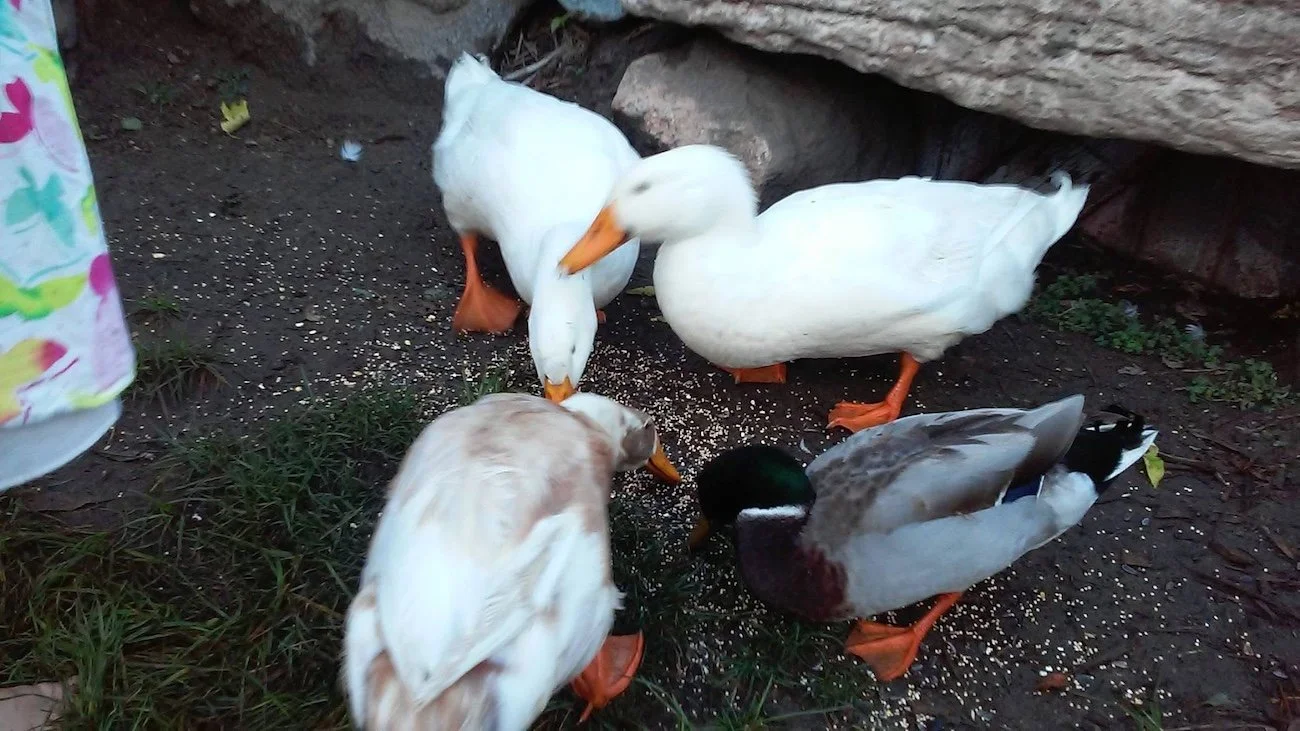
four ducks being fed while caring for duck ponds

It’s important to install plants in the pond, but remember ducks are voracious eaters. You’ll need to protect planting in and around the pond. I had success with fences and nets to protect plantings.

Clear Lake Duck Pond

For the Clear Lake Duck Pond, we built rock ramps in the shallow area of the pond to allow the ducks to easily enter and exit the pond. One common mistake is to make the pond too shallow. A deeper pond is a healthier pond, so we like to make our duck ponds 3.5’ to 4’ deep. This depth will keep the pond cooler and thus decrease algae blooms.

 
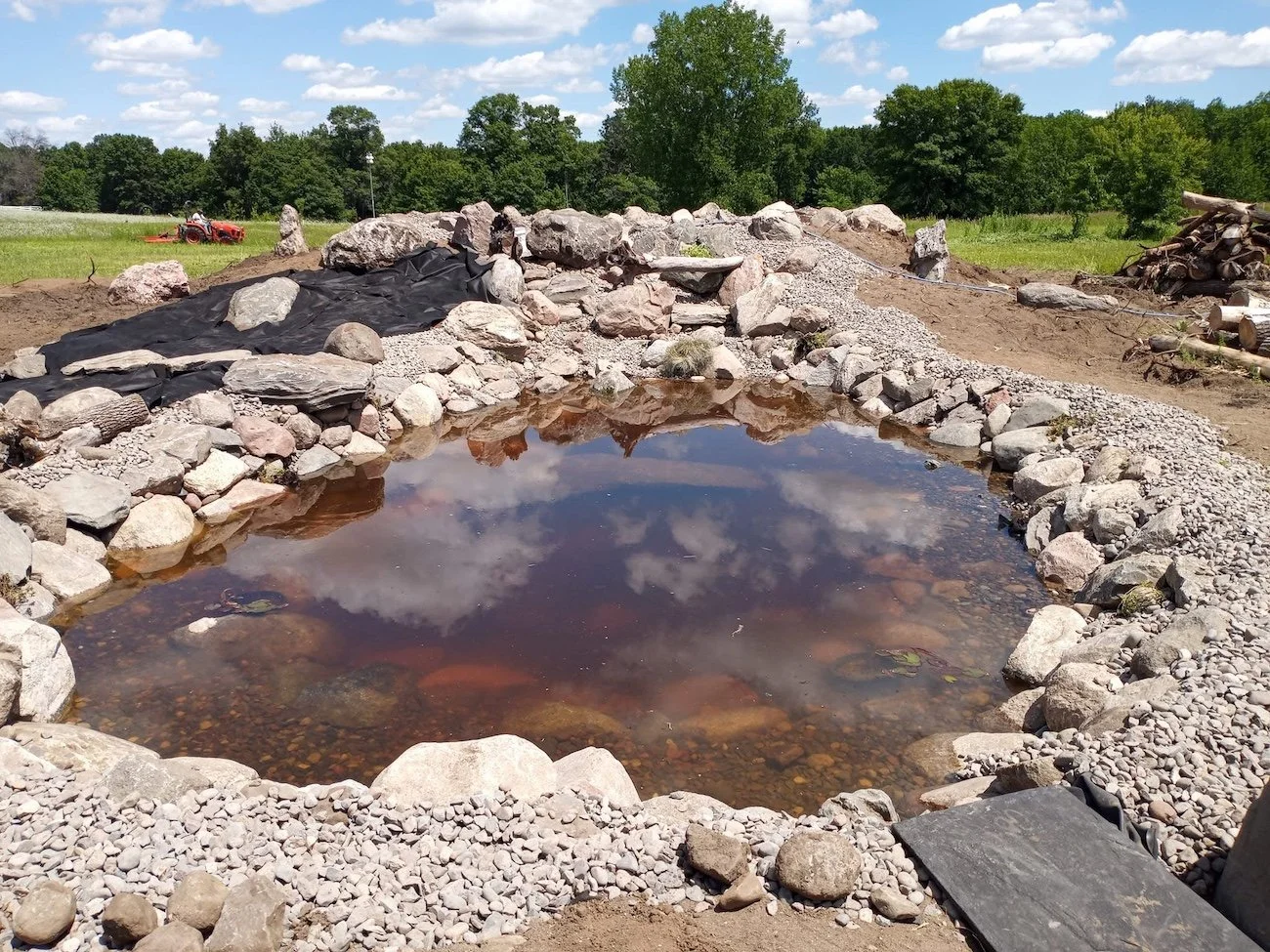
large duck pond
 

This last fall, we returned to Clear Lake to shut down and winterize the pond for winter. The water in the pond was crystal clear despite a dozen ducks using it all season and the pond being in full sun. The Natural Filtration System was working beautifully filtering the high nitrogen load from the pooping ducks, and the 4’ depth of the pond kept the temps lower.

Want to build a pond for the local ducks in your backyard? We have the tools and knowledge to create a pond perfect for your home without you having to lift a finger.

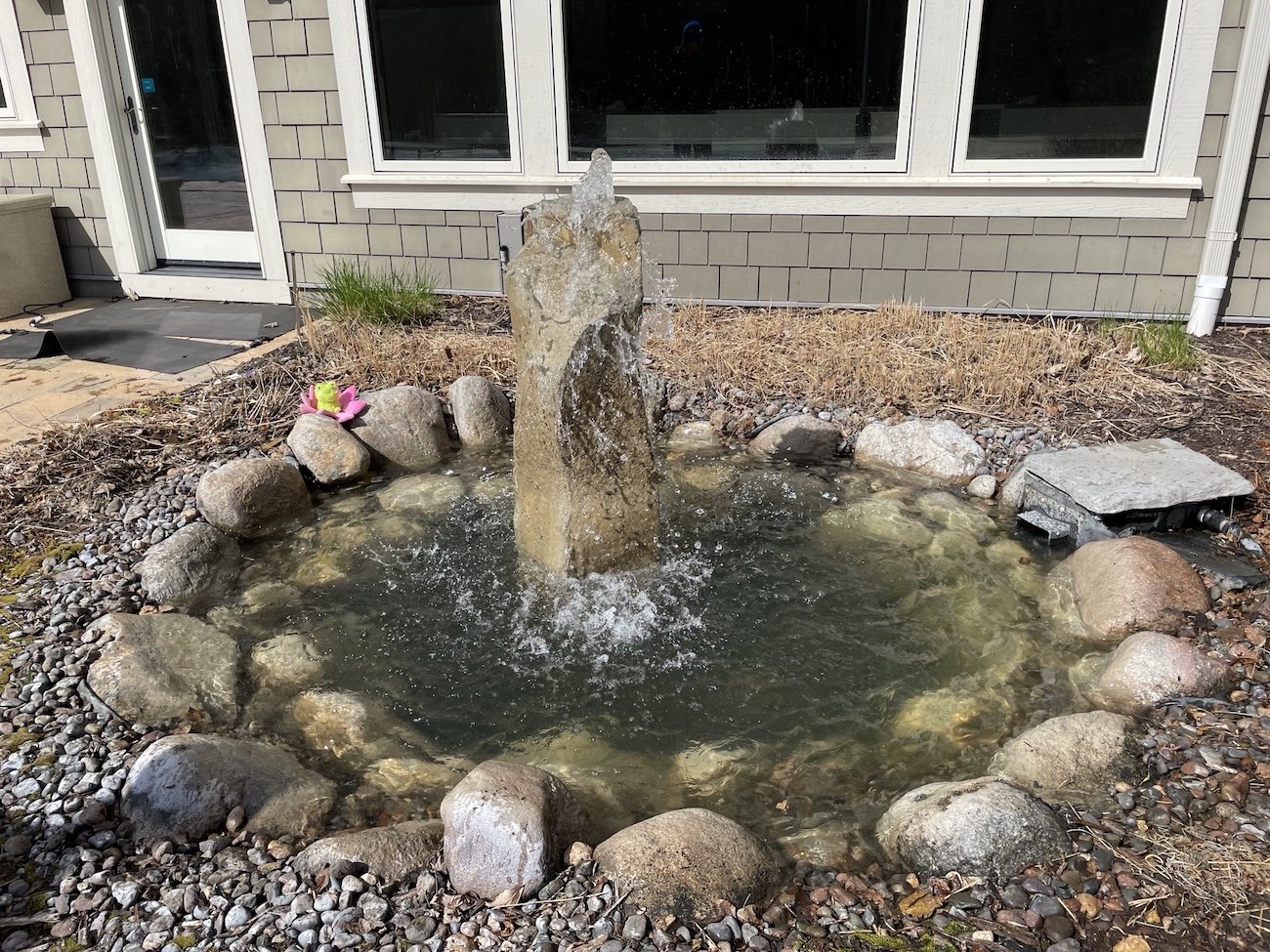
How to Clean Your Backyard Pond or Water Feature

Cleaning a pond or water feature is crucial for health, aesthetics, and function. It removes harmful debris, algae, and parasites, which prevents oxygen depletion, disease for fish, clogged pumps, and nutrient buildup. This ensures a balanced ecosystem and clear, beautiful water for plants, wildlife, and enjoyment. Neglect leads to murky water, sick inhabitants, and costly equipment failure, making regular cleaning essential for a vibrant feature.

Cleaning a water feature should occur every spring once the ice has fully melted and the ground has thawed. Below is our checklist to clean and prepare your water feature for the upcoming season.

backyard-pond-rocks-clean-ponds-water-feature
dirty water feature how to clean your backyard ponds or water features

Spring Water Feature Cleanout & Start Up Process:

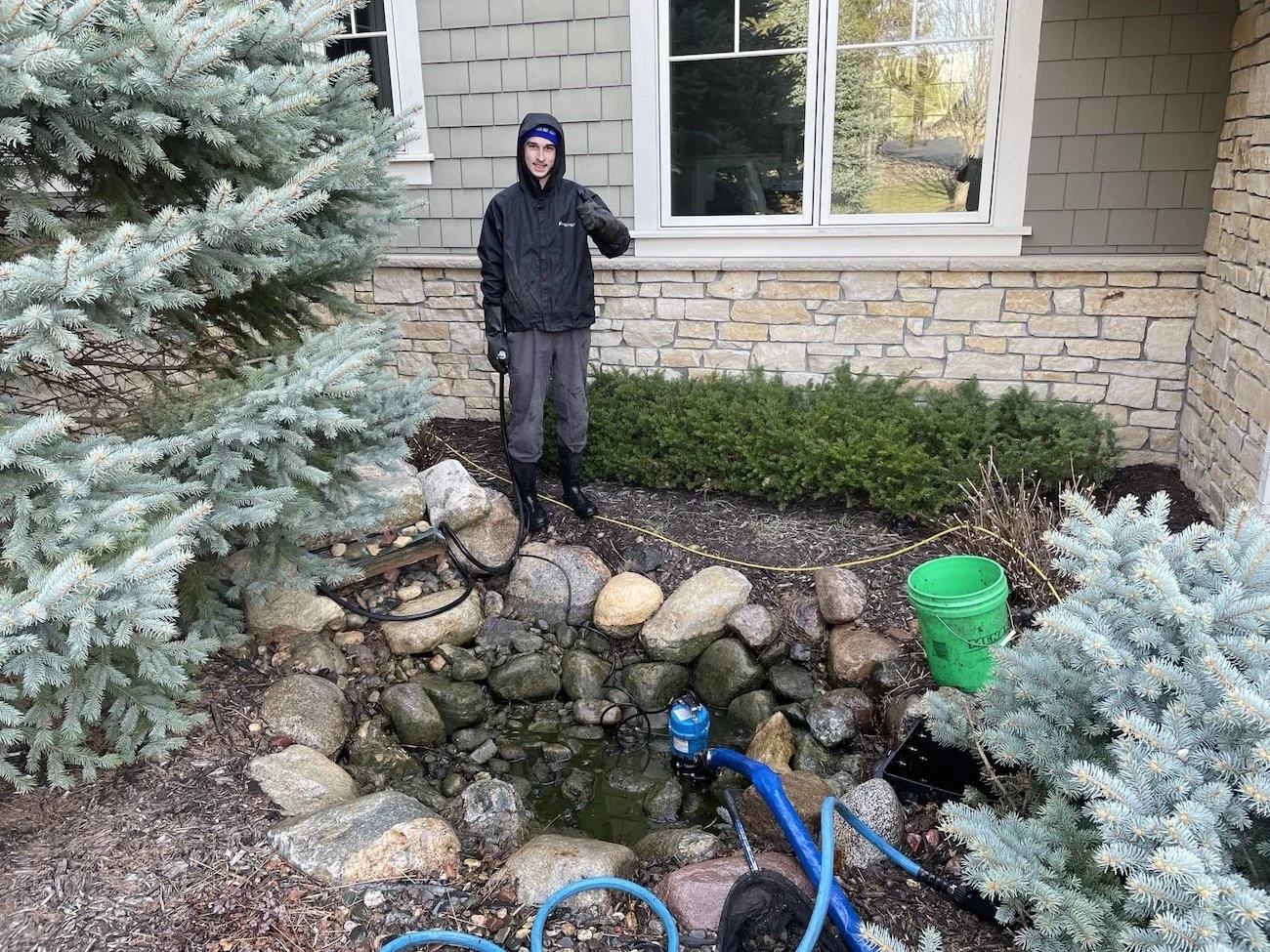
  1. Pump out existing water: we use a 2” discharge pump with vinyl hose to remove the water.

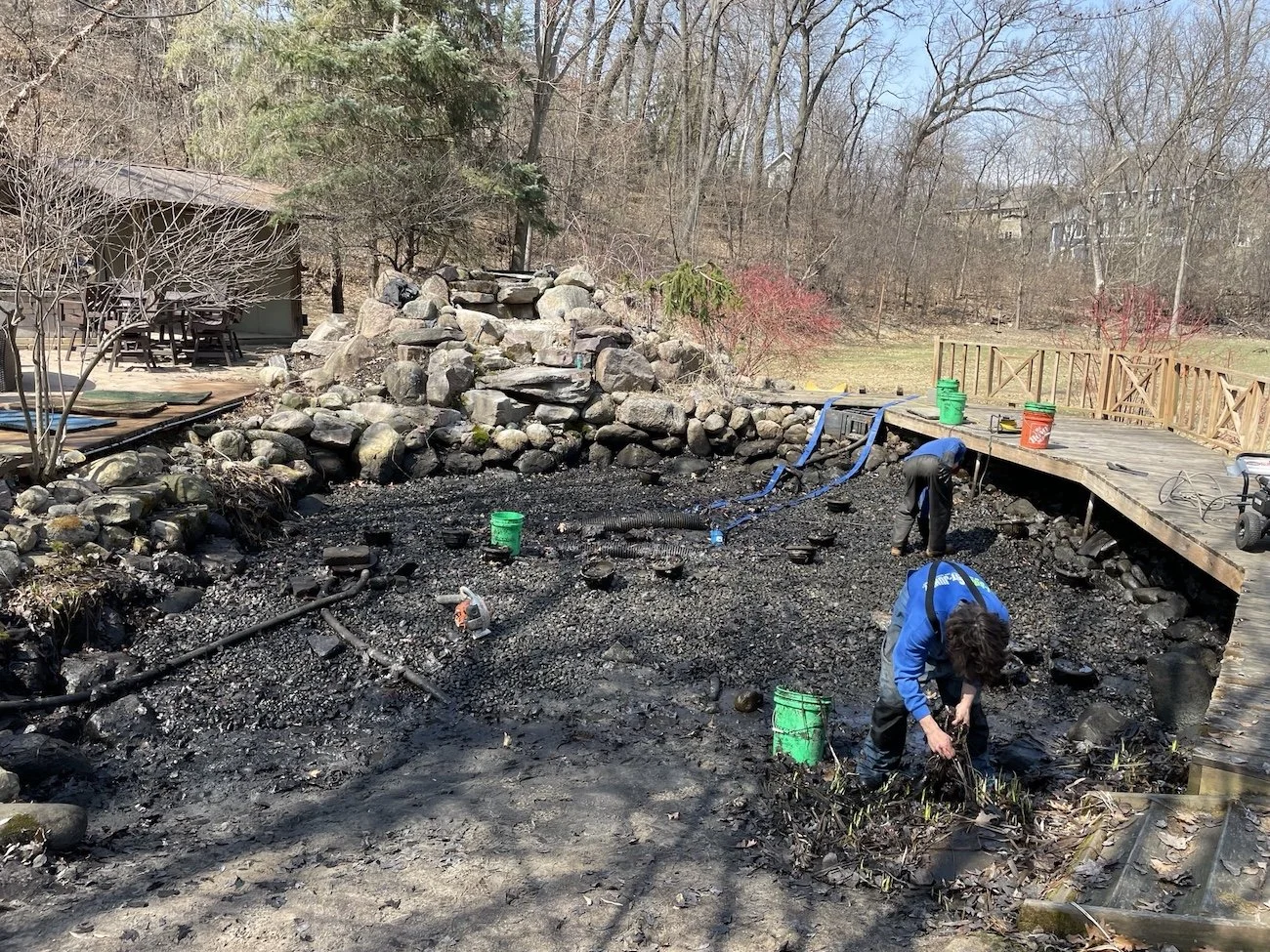
  2. Manually remove and bag leaf debris: we will typically place two 5-gallon pails of debris in a thick garbage bag to be transported to the compost site. Otherwise, the debris is fantastic for compost.

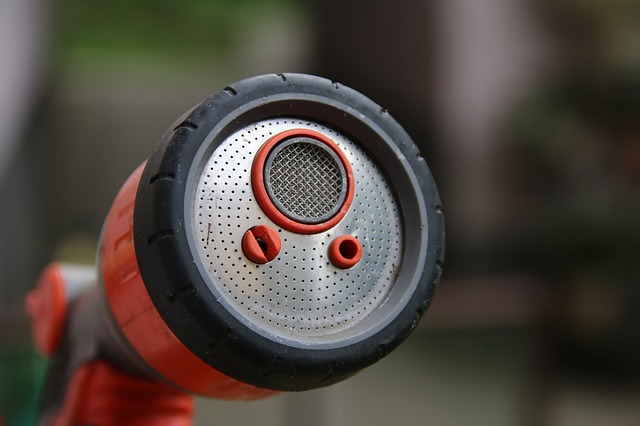
  3. Rinse entire water feature while pump discharges bad water: a garden hose with a spray nozzle is then used to rinse the entire water feature from the top down. During the rinsing process the discharge pump is placed in the lowest point of the water feature and is pumping out the dirty water and organic sludge.

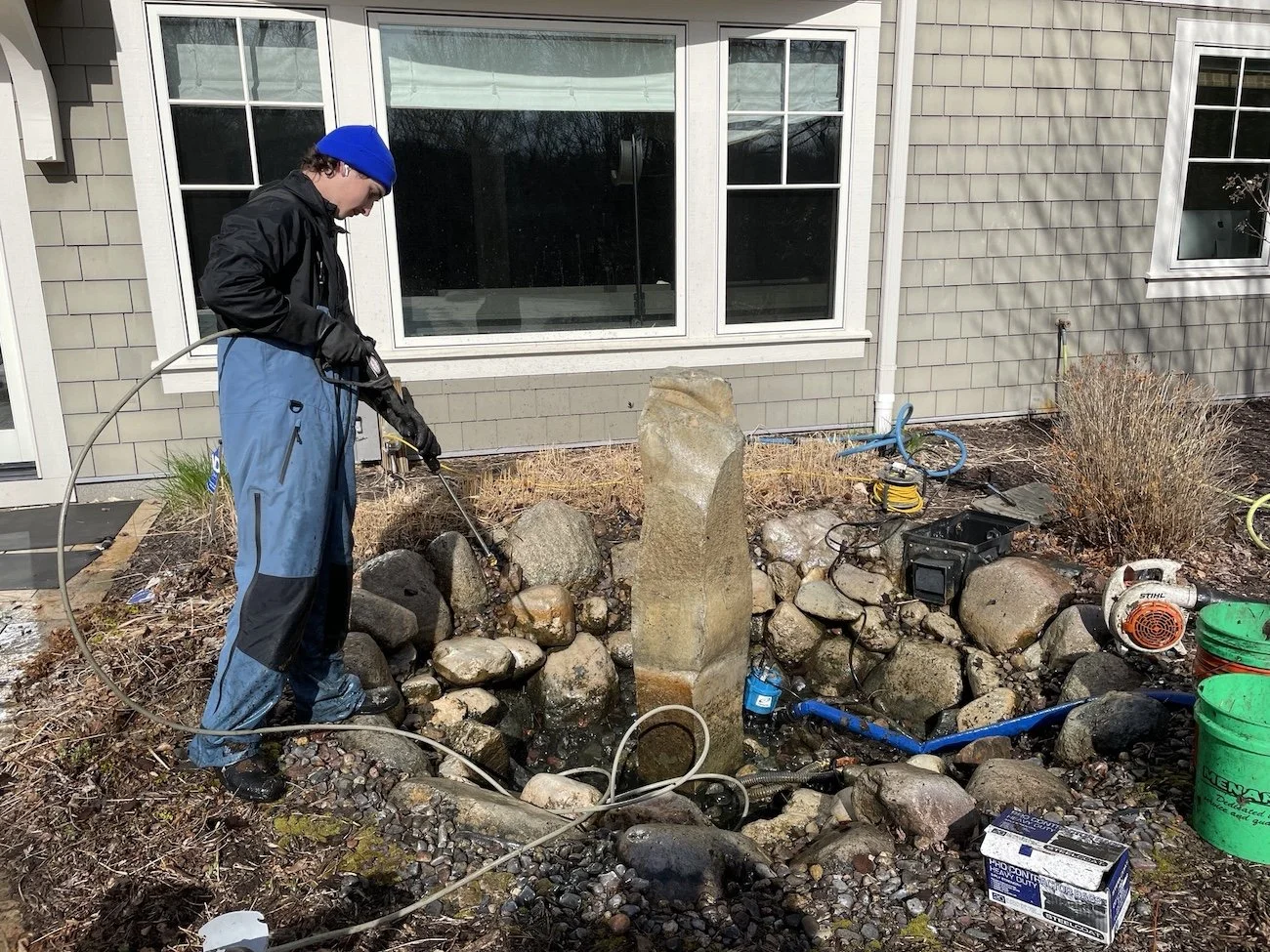
  4. Power wash boulders and rocks: it’s important to wear safety goggles or a face shield to protect your eyes and face. Wearing rain pants and a rain jacket is also a must.

  5. Rinse entire water feature a second time while pump discharges bad water: the algae that was blasted off the boulders with the power washer now needs to be rinsed to the bottom of the water feature (pond) and pumped out.

  6. Clean skimmer box, skimmer box filters/net/basket and clean headwaters: a small 1/3 horsepower pump connected to a garden hose works wonders.

  7. Remove and discard dead animals: unfortunately the removal of dead fish, mice, voles, moles rats, squirrels, possums, frogs, turtles and so forth are part of the process.

  8. Test pump to make sure it discharges water properly: prior to installing the pump(s) to the hoses they should be tested in a 5-gallon pail of water to ensure they are in proper working order.

  9. Assemble pump back onto hose in skimmer or pump vault: most pumps are attached to a hose with a threaded collar or rubber coupler with hose clamps.

  10. Fill up water feature with new water: water features are filled using a garden hose and if the pond is large a healthy dose of patience.

  11. Add dechlorinator and start up bacteria to new water: if the pond will contain fish, which are removed and placed in a stock tank during the cleanout, and the house is supplied by city water, dechlorinator will need to be added to make the water safe for fish. Adding beneficial bacteria to the water feature is essential to create balance ecosystem.

  12. Visually inspect water feature when running: once the pond is cleaned and running it’s important to visually inspect the water feature. Keep an eye out for water existing the system and for any potential repairs.

Pumping water out of feature how to clean backyard ponds

Pumping out existing water

Clean out debris how to clean backyard pond water feature

Manually removing debris

Powerwashing rocks how to clean backyard pond water feature

Power washing rocks

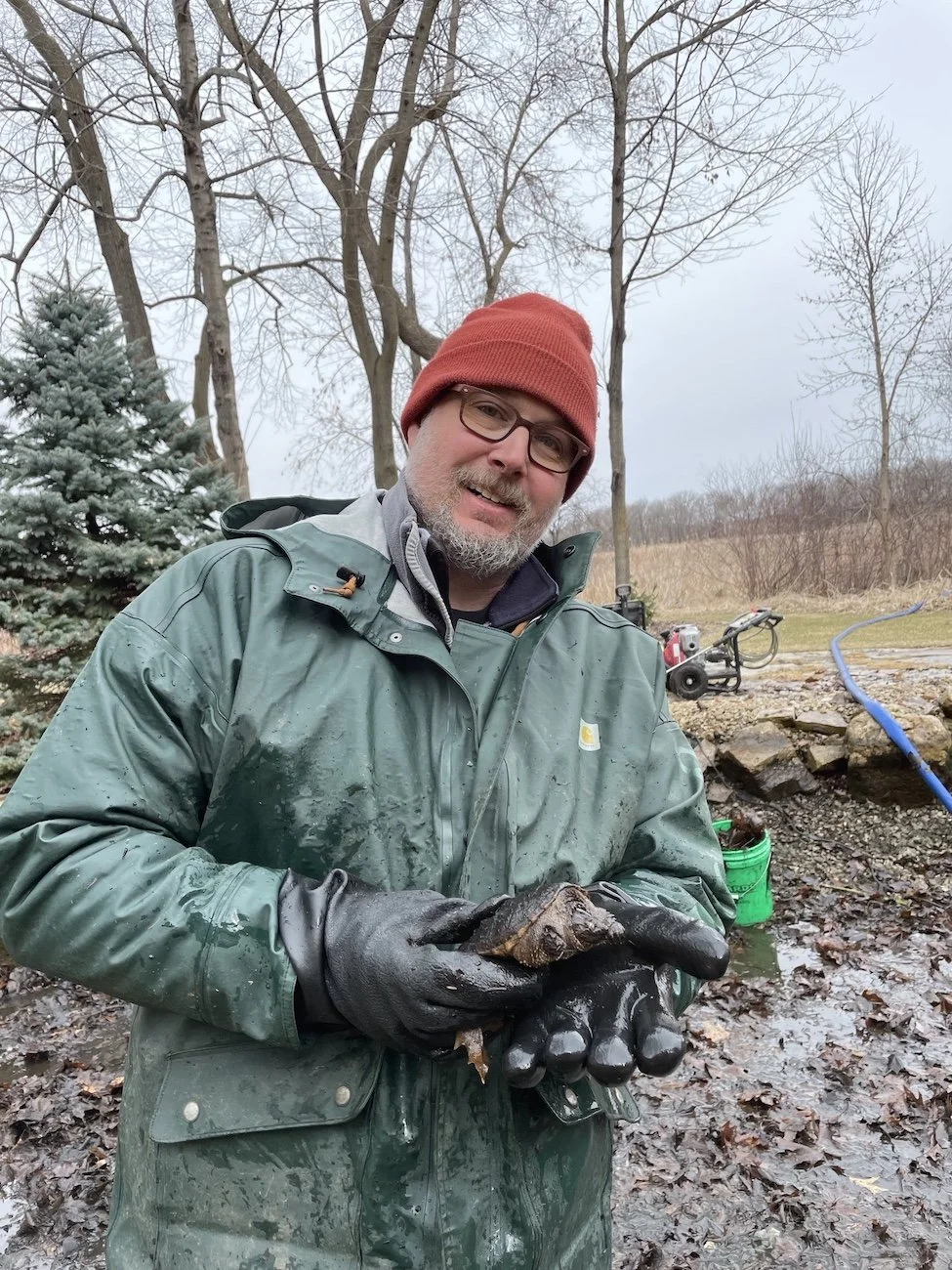
Finding a turtle how to clean backyard ponds water features

We found a turtle while cleaning

 
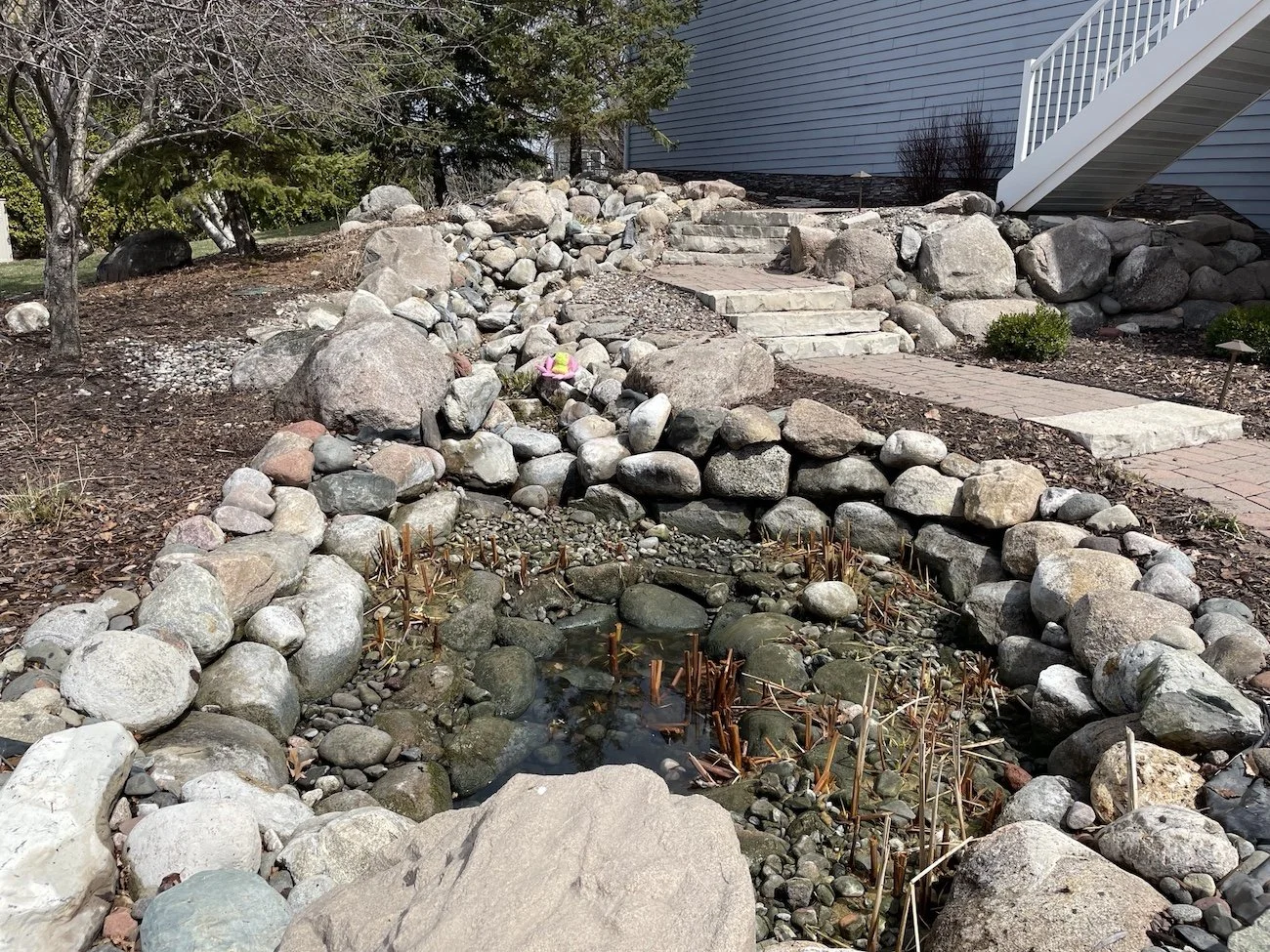
Cleaned pond how to clean backyard ponds water features
 

Want to sit back and relax while the professionals clean out your pond to prepare for the spring? Sign up for our Spring Pond Cleanouts to get to relaxing.

So, what is a Pond Consultation?

Learning is the only thing the mind never exhaust, never fears, and never regret
— Leonardo Da Vinci

Leo as his friends would call him is regarded as quite the Renaissance Man, of course he was born during The Renaissance so it’s not surprising.  Kidding aside, what does Leonardo Da Vinci have to do with ponds in Minneapolis?  It’s all about learning, it’s all about doing better.  Our goal is for you to fully understand your water feature which will in turn lead to more enjoyment.

pond-maintenance-Minneapolis-backyard-ponds.jpg

It’s not unusual to get a call from a frustrated new homeowner with a question about a water feature they’ve inherited.  They are looking for answers and oftentimes do not even know the questions to ask.  Can this be handled on the phone?  Yes, however being on site to see the water feature and to answer questions is always the best options.  Therefore, DIWhy offers evening on site pond consultations. 

A pond consultation runs approximately one hour, and we teach homeowners about basics of maintaining the water feature.  The consultation will cover filtration, aeration, water plants, fish, biological additives, how to improve the water feature, pest control and so much more.  Our goal is to provide everyone with the resources needed to care for their water feature and thus maximize the enjoyment.  The cost of a one-hour evening pond consultation is $100, but here is the kick, if there are improvements or repairs needed and you hire DIWhy to resolve these issues DIWhy will take the $100 consultation fee off that price (minimum $400 of work).

pond-maintenance-Minneapolis-backyard-ponds.jpg

DIWhy services the entire metro area of The Twin Cities and The Twin Ports and we have worked on hundreds of water features.  Our experience comes from not only working in the field but also through workshops and networking with other pond contractors and pond suppliers and problem solving with some of the best…in the business.  We’d like to share this knowledge with you so you can enjoy your pond and the water garden hobby. 

The noblest pleasure is the joy of understanding
— Leonardo Da Vinci

Stressless Oasis

outdoor-pond-maintenance-Minneapolis.jpg

Pond care can be a labor of love.  CAN BE.  It takes desire, time and knowledge to keep a water feature a healthy functioning ecosystem.  Keeping a pond in balance using the pond’s designed filtration (whether natural or mechanical) with water plants, fish and biological additives can be a delicate task. Many homeowners revel in this task and water gardening provides a great way to enjoy the outdoors and to relieve stress.  However, for others their pond becomes a source of frustration.  Keeping that oasis beautiful now becomes a summer chore.  That’s where DIWhy comes in.  Starting in April 2020 DIWhy will offer Seasonal Maintenance Contracts!

How does a Seasonal Maintenance Contract work?  Every other week a DIWhy employee will be out to complete the following tasks:

·       Clean skimmer box net/basket/filters/brushes and pump 

·       Fertilize and trim and water plants

·       Change light bulbs

·       Add biological additives such as algicide, barley extract and beneficial bacteria

·       Weed along the peripheral of water feature

·       Adjust auto fill and/or pump auto shutoff

·       Net any floating debris

·       Visually inspect the water feature and make repairs if needed

·       Feed fish

Minneapolis-backyard-pond-maintenance.jpg

Our maintenance visits begin after the Spring Cleanout & Start Up and run all season until the water feature is shutdown the last week of October.  So why choose DIWhy?  We are a full-service pond contractor that focuses on one thing, water features.  We build, repair and maintain water features and this has given us extensive knowledge in all aspects of water gardening.  We’ve worked with ornate fountains, bubbling boulders, pondless water features, small to large ponds, cement ponds, natural water filtration, mechanical filtration, uv filtration and so much more!  

So, what does it cost?  Each maintenance visit is $89.  The only other cost is the product (pond chemicals, light bulbs and so forth).  Large repairs are billed separately, and consent is given by homeowner prior to beginning the work.

Contact DIWhy for a Seasonal Maintenance Contract and transform your feature into a stressless oasis today!  Imagine stepping out your door and walking over to your water feature and simply enjoying the sights and sounds of the running water, the beauty of the water plants and the colors of the koi without adding to your to-do-list.

4 Winter Tips for Your Minneapolis Outdoor Plants

The first chilly days of winter are here for us Minnesotans. If you have outdoor plants in Minneapolis, it’s important to find ways to protect them as the snow falls. Some plants might be able to come inside during the winter, but what should you do for plants that have to stay outdoors, such as bushes and small trees? Here are some of our tips on how to keep your plants safe during the winter.

winterizing-outdoor-plants-pond-yard-Minneapolis.jpg

Mulching

Making and laying down mulch is a great way to protect your outdoor plants over the winter. Mulch made of ground up organic materials, such as leaves and grass, make a great barrier between your plants and the winter air. It regulates the temperature of the ground and has great nutrients for the plants to use. It’s easy to make the right mulch and spread it over your garden bed and your plants. Remember to keep adding more as needed throughout the winter if you can.

Coverings

Some shrubs and bushes will do better over the winter if they are covered with a simple cloth or blanket. The coverings will protect your outdoor plants from the wind and harsh weather. If you want to provide these plants with extra insulation, place mulch around the plants before covering them to keep them healthy over the winter. Coverings can also help with smaller trees that have more vulnerable tree trunks.

outdoor-plants-winter-care-backyard-Minneapolis.jpg

Digging up bulbs

For plants that have bulbs, like cannas and dahlias, bulbs should be dug up and placed in pots over the winter to be ready for planting in the spring. Because most plants with bulbs are more common in warmer places, they will not survive over the winter.

Pruning

Pruning, or thinning out dead branches, makes it easier in the spring for your plants to grow in and look great. It is easier to do when it is dry and not bitter cold. Be sure to thin out your bushes and small trees before it gets too cold.

With this guide, we hope your plants will be happy and healthy throughout the winter and into next spring. If you want to sit back and relax and have the professionals take care of your backyard ponds and plants, contact us to learn more about how you can DIWhy it instead of DIY it.

How to Put up Lights for Your Minneapolis Outdoor Pond

The summer and fall are times to enjoy the backyard a few more times until winter comes. Lights around your outdoor pond can give it that glow you’re looking for to complete your backyard. If you want to try to do it yourself, we are here to support you. Here’s how to install your outdoor lights. 

Before installation

Before you start to installation, you will want a safe power source. An outdoor transformer can be installed with just enough electricity to safely power your lights. Usually a 12 volt outlet with a weatherproof box will light up your pond safely. Contact your electrician to find the best solution for your outdoor lights. You’ll also want to make sure that the lights you buy have waterproof seals to avoid electrical complications.

pond-lighting-Minneapolis-outdoor-landscaping-maintenance.jpg

Light choices

The most common type of bulb used are LEDs up to 12 watts. It is important to consider the maintenance costs of keeping up the bulbs. These bulbs are more energy efficient and last longer than most other bulbs. Call your electrician to find out more of your options.

Downlights

Downlights are lights that are above your pond. While the lights will not be submerged, they will have to be outside in all kinds of weather. String the lights around surrounding trees, or use tall stakes to string up the lights around your pond. This kind of lighting is easy and provides a natural look to your pond. 

Submerged lights

Lights that are submerged in your pond are more difficult to place, especially with plants and fish. To install them, the pond will have to be empty for your safety. Place them wherever you like to light up your pond into sparkles. If you have a pond waterfall, a great place to put a light is right behind the waterfall. Mount the lights on the side or secure them with weights. 

If you want to learn more about your pond lighting options or want us to do the hard work for you, call DiWhy Exteriors. We are ready to help you with your outdoor pond and landscaping needs.

Summer Pond Maintenance Checklist for Minneapolis Pond Owners

The summer months are for enjoying your Minneapolis backyard in the sun with the pond that you worked hard to put together. Maintaining your pond through the heat, rain, and sun is important to the overall health of the pond and the plants or fish you have. If you need to know how to maintain that pond, we made a summer checklist for you.

backyard-pond-maintenance-summer-Minneapolis.jpg

Trim plant growth

Summer is the time for plants to grow and thrive, but too much growth can choke out other plants and cover your fish. It is important to keep trimming back your plants each month, or week if there is excessive growth, to keep your pond healthy. Small bugs often find homes in large plant growth, which could endanger the fish. Check your plants and filter for any beetles or other bugs that could take food away from your fish and plants. There are also chemicals or dyes that can be added to your pond to restrict pond growth, but it is important to be careful when choosing the chemicals or dyes. Some will encourage algae growth or be harmful for your fish. Talk with your professional pond expert to find the best solution for your pond. 

Check the filter

To keep your pond looking great and stay healthy, cleaning out the filter every week or more is an important step. Larger ponds should be checked every day to avoid clogs or damage to your filter. After a strong storm, winds, or rain, check your filter for excess debris in your pond. The strong winds carry plant life into your pond, putting extra stress onto your filter. Keeping up to date with checking your filter can save you time and money from a broken pond filter.

Add healthy bacteria and chemicals

While some bacteria is harmful, there is helpful bacteria that encourages a healthy environment for your plants and fish. Regularly adding natural bacteria, about once a week or once a month, will make your pond look great and your fish stay healthy. There are many kinds of healthy bacteria, so talk with your pond expert to learn more about which solution is right for you. Having the right amount of chemicals can influence the hardness, pH levels, and oxygen levels in the water. Checking those levels on a regular basis and adjusting it as necessary will keep your fish and plants growing strong. Talk with the Pond Doctor if you have any questions about how to maintain water hardness, pH levels, and oxygen levels.

summer-pond-maintenance-checklist-minneapolis-backyard-ponds.jpg

Feed your fish

It might be obvious, but your fish need food. With a sprinkle of food every day, your fish will be happy and full. Smaller amounts of food are important during the summer months because they also eat the plant debris that falls into the pond. If you go on vacation for a couple of days, your fish will continue to eat the debris and stay healthy. If you go on vacation longer than a weekend, you may want to have someone check on your fish while you’re away. Remember that there are different feeding methods for fall and spring, so be sure to ask your pond expert about your fish if you have any questions. 

Check the water level

The heat of summer and storms that blow in will evaporate the water or overflow your pond. Be careful to add treated water so that your fish can adjust to the new water. Most ponds can be checked for water level every week, but each pond is different. Talk with your pond professional if you have any questions about what healthy water levels look like for your pond. 

Maintaining your pond can busy your day. Talk to the experts at DIWhy to take care of your pond and get the best advice. We are happy to help with any pond and landscaping maintenance.

How to Stop and Prevent Algae Growth in your Minneapolis Pond

If you have a backyard pond in Minneapolis, you probably have experienced the frustrations with algae growth. The green slime looks bad and smells worse. Thankfully, there are many ways to stop and prevent algae growth. 

backyard-pond-maintenance-Minneapolis-algae.jpg

How algae grows

To properly prevent algae, it’s important to know how it grows. Algae forms when there is direct sunlight and unused nutrients and oxygen in the water. Small amounts of algae are healthy for ponds, but too much algae can take away the oxygen in the water from other plants and fish. It can take nutrients from fish waste, dying plants, and other organic sources. 

Types of algae

There are many different types of algae that can form in your pond. The most common are green water and string algae. Green water algae is an algae that coats the surface of the pond and is too small to skim out. It is often seen in circles, called blooms, and spreads outward to the rest of the water. String algae, which is also called hair algae, grows in strings that can be picked up by hand. Even though it usually grows on rocks and by waterfalls, it can grow in larger ponds. If the strings get tangled together, it can form a larger, and heavier, clump of algae. Both types can be dangerous to your pond’s health if they grow out of control. 

Minneapolis-backyard-pond-algae-fish.jpg

Plant and fish solutions

Other plants and fish can help balance the pond’s ecosystem to keep algae growth at bay. Plants that cover the top of the water give algae less room to grow and less sunlight to absorb. Plants like lily pads and lotus cover and shade areas of your pond where algae would have a higher chance of growing. Underwater plants also help absorb nutrients that algae might use to grow. Balancing the number of fish you put into your pond is also important when preventing algae growth. Waste produced by fish has nutrients that plants use to grow. When there are more fish than plants in your pond, the excess nutrients are taken up by algae, allowing it to grow faster. 

Treatment solutions 

There are many quick treatment options that are available to get rid of algae. Algaecides are chemical and natural treatments that removes the algae without harming other plants and fish. Use each one as directed on current algae growth. To prevent algae from growing, install an algae filter or find other preventive measures, such as barley straw, that release counter nutrients that prevent algae growth, but are not harmful to fish or other animals.

If you are looking to find an algae solution that fits your needs and budget, call us at DIWhy for more information about ways to stop and prevent algae growth. We are here to help your pond look great and be healthy.

8 Steps to Adding Fish in your Minneapolis Backyard Pond

Warmer weather is in full swing in Minneapolis, which means yard work and pond maintenance is underway. If you’re feeling adventurous or want to try something new this year, adding fish to your backyard pond is a great way to spice things up. If you’re wondering how to get started, look no further. Here are eight steps to get yourself some fish in that pond.

fish-Minneapolis-backyard-pond.jpg

Make sure your pond is large enough

Depending on the fish, they can grow to be over one foot long. The most common pond fish are goldfish and koi because they are hardy fish that might not need a filter, even though it is recommended. Goldfish are smaller and can be hosted in smaller backyard ponds. However, it is important, especially for freezing winters, to make a large portion of your pond be over two feet deep. When the water freezes, ice will stop around two feet in depth, allowing the water underneath to still be livable for your fish.

If the pond is new, let the water cycle

With new water, the nitrogen levels can be harmful for fish to be introduced to right away. It is important to let the water cycle for a couple of days before adding fish for the safety of the fish.

Test pH levels

The recommended pH levels is 7.2 and 7.8 for keeping fish. Unfiltered tap water might have too much chlorine for your new fish. Get a de-chlorinator or ask the Pond Doctor for tips about how to balance the chemicals in the water for your fish.

Minneapolis-fish-backyard-pond.jpg

Install filter and/or plants

A filter is helpful to keep your fish healthy and happy. However, it does require regular checks and maintenance. Goldfish and koi can survive without a filter, but the pond itself will require more attention to maintain a healthy amount of chemicals. With or without the filter, plants are a must-have for your pond. Above water plants and underwater plants provide hiding places for the fish to relax, which is especially helpful to them during stressful weather. They also provide oxygen for the fish to breathe, especially underwater plants. Make sure all of the roots are buried in dirt and rocks or in a pot so the fish won’t get stuck or eat them, killing the plants.

Purchase fish

The number and type of fish you want will depend on how big your pond is. Goldfish are smaller and can live in smaller ponds, but they can grow to be six to twelve inches long, depending on the space they have. The recommended amount is around 100 gallons, but they can live in structures with fewer gallons. Koi are much larger, growing around twelve to thirty-six inches long depending on the type, and need a bigger space. The recommended amount of water is 1,000 gallons. Other kinds of fish can work, but will require more maintenance. Talk to the Pond Doctor for more options and the required work for those options.

Acclimate fish

Fish need time to adjust to the temperature of the water before being released into a new environment. Place the bag into the pond on a nice day for less stress on the fish. Wait for them to adjust for around thirty minutes, or as long as the air is in the tied bag. Then, add some of the pond water into the bag. After about fifteen minutes, the fish are ready to be released into the pond. Open the bag and allow them to leave the bag on their own into their new home. Fish can get stressed easily, so it is important to take your time during this process.

fish-pond-Minneapolis-backyard.jpg

Feed fish

While they may eat some bugs to get nourishment, it won’t be enough for them to survive. Regularly feed your fish to keep them healthy and strong. However, it is important to not overfeed your fish either. Leftover food can release nitrogen into the water, harming the fish. The fish excrement will also raise nitrogen levels. Plants and bottom-feeder fish can help lower the nitrogen levels as well as some nitrogen eliminating kits. Different types of ponds use different solutions. If you would like help finding a solution for your pond, ask the Pond Doctor.

Check water frequently

Besides nitrogen, algae and the pH levels of your pond have to be checked frequently to keep the fish happy and healthy. Algae usually forms in shade from surface plants or structures around your pond. Removing the algae and plants and objects in the way could save your fish. The levels of pH should be checked every two weeks.

If you have any questions or would like advice while putting fish into your pond, call the Pond Doctor today. Here at DIWhy, we are ready to help you make your yard lively and beautiful.

4 Reasons to Hire A Minneapolis Professional for Pond Maintenance this Spring

As spring shows its full colors in Minneapolis, it’s time to get your backyard pond out from hibernation. While there are many ways to get your pond ready, but only a professional can tell you how your pond is different and how to get it ready. This isn’t the only benefit to having the Pond Doctor help with maintenance. Here are some other benefits of hiring a professional for your pond maintenance.

pond-maintenance-Minneapolis.jpg

Expert Advice

Whether or not it is your first DIY project, there may be complications. Not all backyards are the same, and making the pond work with your backyard is something that a professional can give you advice on. They can make suggestions, cater to your style, and show you the ins and outs of pond maintenance.

Special Equipment

Having the right equipment to clean out your pond properly might be a hassle. A professional will have all of the right tools when you need them, and they will know how to handle them correctly. Your pond professional could also give you advice on the best equipment to buy for your pond in the future.

Experience

Armed with experience from many years of cleaning, maintaining, and building ponds, a professional can share their wisdom and make sure your pond is ready for the summer. Experience and hands-on work with multiple types of ponds is helpful for fighting off algae and other harmful particles that grow in ponds. They also keep up with trends and new brands.

Minneapolis-pond-maintenance-spring.jpg

Identify Potential Problems

Every yard and pond could cause problems in the future, but professional pond maintenance will prevent it or provide solutions for you to weigh out your options. If you have any questions or are worried about potential problems, call the Pond Doctor for more information and have your questions ready.

If you would like the Pond Doctor to help out with your pond maintenance, call us today to get started. All of us at DIWhy are ready to help make your pond the healthiest it has ever been.

4 Things to Do Now to Get Your Minneapolis Pond Ready for Spring

While the weather is still in winter, you may be starting to dream about spring. You can’t wait to get back outdoors and enjoy your Minneapolis outdoor pond and the sunshine. If you like to plan ahead, here are some things you can do now to get ready to open your pond in the spring.

backyard-pond-Minneapolis-spring.jpg

Purchase cleaning supplies

Once the snow melts, there are a lot of leaves and dead plants that will cover your pond and backyard. Make sure that you have a rake to get everything from the surface and a skimmer or pond vacuum to get the debris out of the pond itself.

Plan for your plants

If you plan on putting plants and fish in your pond, you will want to start planning what plants will be best for your fish. Once it is warm enough to clean out your pond, a lot of the plants that were in there before will have to be cleaned out. Remember to get good fertilizer for your plants once they start growing in the pond. While many stores do not have summer plants out yet, now is a good time to start planning and get a jump on your backyard pond design.

Prepare your pond filter ready

Whether your pond filter is tucked away or left outside all winter, you will want to make sure that everything still runs smoothly before you put it back in with your fish. Running your filter for a little while before setting it back up in the spring is a good idea to ensure the health and safety of your fish. If the filter broke in some way, it is good to know early so that you have time to get a new one before uncovering your pond.

Minneapolis-pond-backyard-spring.jpg

Purchase chemical testing materials

Once you’re ready to open your pond up for the spring, you’ll have to check the ammonia and nitrate levels of your pond along with adding any water treatment solution. Obtaining these materials now can save you a lot of time once spring comes. Chemical levels are important to check right away in spring for the health of your pond later in the summer. Get these materials early to tackle your spring relaxation. It is also important to remove your fish while treating your pond’s water. If you have any fish in the water over the winter, make sure you have a place to put them while treating the water in the spring.

For any questions about materials that you need for the spring, don’t hesitate to call the Pond Doctor. All of us at DIWhy are ready to help you get ready for a nice spring and fun summer.

6 Key Steps to Prepare your Minneapolis Outdoor Pond for Winter

Preparing your yard for the winter months is important when you live Minneapolis. When you have an outdoor pond, you’ll want to know how to prepare it for the freezing winter months ahead. Here are some simple steps to preparing your pond for winter.

6-steps-to-prepare-your-outdoor-pond-for-winter-minneapolis.jpg
  1. Reduce food for your fish

    Before the weather starts to drop below 50 degrees, you will want to start lowering the amount of food you give your fish. That way, they will be prepared for the lack of food in the winter and survive until spring. An indicator that it’s time to stop feeding them is when the outdoor temperature drops below 50 degrees. If your pond is shallow, it is a good idea to bring your fish inside. Typically, ice will freeze around four inches thick, but can get up to ten inches or more.

  2. Clean out your pond

    Dead plants and leaves can decay and poison your fish and other plant life if left in your pond over the winter. Rake out all the leaves and plants in your pond for healthier water in the spring.

  3. Move or remove plants

    Living plants can easily survive the winter if properly taken care of. Plants that are more hardy can stay in your pond if pushed more than 18 inches below the surface of the water. If your pond is not that deep, it is best to remove all plants to a warmer area. More delicate plants, like tropical lilies, need to be in a place where they won’t freeze at all. Remember to keep them watered while inside. Most plants can be wrapped with damp newspaper to keep from dying and placed in a warm area. Ask the Pond Doctor for more tips on plant health to keep your plants alive over the winter.

  4. Clean and move the pond filter

    Removing any dirt and filth from your filter will extend the life of your filter year to year. To protect your filter from ice damage, you will want to think about moving it out of the pond for the winter. Make sure to drain all the water before putting it in storage. Another option is to move it closer to the surface of the water so that any bubbles it creates will keep the water from completely freezing. Because of our Minnesota weather, we recommend removing it for the winter.

  5. Vacuum the pond if necessary

    If your pond is at a depth where you cannot scoop out the dead plants and leaves at the bottom, it is a good idea to vacuum them out from the bottom of the pond. It will keep your pond healthier over the course of the winter and  provide clean water in the spring.

  6. Cover your pond

    The last step is to cover your pond with netting or tarp over the winter. After all the cleaning you did, you’ll want to keep it clean until spring. The net or tarp will catch all the leaves and snow before it can get into your pond. Remember to clean off the netting or tarp every once in a while so that it doesn’t weigh down and fall into the pond.

Minneapolis-winterizing-your-pond.jpg

Following these easy tips will prepare your pond for winter, and help you rest easy until spring. If you’re ready to learn more about Fall and Winter pond maintenance, then we’re ready to help. Simply contact us for more information.

4 Keys to Creating the Perfect Minneapolis Backyard Pond Waterfall

Adding a waterfall to your backyard pond can impress guests and help you enjoy the peaceful atmosphere it provides. Waterfalls are a great feature to add to any Minneapolis backyard pond. Before you start designing your waterfall, it’s best to keep these 4 keys in mind.

backyard-pond-waterfalls-Minneapolis.jpg

Find your rocks

Rocks are an important part of your pond waterfall, but picking the right ones can be tricky. The most recommended rocks for waterfalls are flat and smooth river rocks. They are sturdy and make soothing sounds as the water cascades into the pond. Boulder-sized rocks are recommended for the main structure of the pond and waterfall. Remember that the structure of a well built waterfall is similar to stairs. You’ll want start with curved falls that land on flatter surfaces. One rock to avoid is limestone. Because they absorb more water than most rocks, there is a greater chance that algae will grow in the rocks.

backyard-pond-waterfall-Minneapolis.jpg

Be on the lookout for slopes

The slopes in your yard have a big impact on the waterfall’s foundation. If your yard has a natural slope, it will be easy to use it as a natural decline for the waterfall. However, if your yard is flat, you will have to dig and build to make an artificial slope. Another way to build a slope is to use multiple molds and concrete to form the right shape. A backyard pond landscape designer may be a good investment to guarantee a successful pond waterfall if you are concerned about placement and lawn care.

Choose your location

Before you pick a location, be sure that it is near an outlet for the pump’s power source. If one needs to be installed, you will have to contact an electrician. One option is a ground fault circuit interpreter. Be sure to talk with your electrician about other options as well. An important note when picking the location is to place your pond and waterfall where you will most enjoy it. For most homes, that is near a patio or by the house. Its calming effect will soothe guests and make your own backyard experience more enjoyable.

backyard-pond-waterfall-Minneapolis.jpg

Gather other important materials

When building your own pond waterfall, there are a lot of materials that you might need. For instance, a rubber liner is needed under both the pond and waterfall to protect it. You may also need sand or gravel to line the pond or fill in the gaps between the rocks. Other materials include a hose, pump, and marine glue. The glue will come out as foam to expand and harden for the smaller gaps between rocks.

Adding a waterfall to your backyard pond can be a great way to upgrade your backyard to a peaceful retreat. But, getting all the details just right can be a challenge. Here at DiWhy Exteriors, we specialize in backyard pond design. If you’re ready to start designing your backyard pond waterfall, the Pond Doctor is ready to help. Simply complete our contact form and we’ll be in touch to answer questions or provide a quote.  

4 Questions to Ask Before Hiring A Minneapolis Garden Pond Contractor

Improving your Minneapolis backyard may include designing and installing a garden pond to help you enjoy the short summer months.  Hiring a pond contractor is a big investment. You may be wondering what you need to know to choose the best guy for the job. We've got you covered with 4 questions to ask before hiring your contractor. 

4-questions-hiring-garden-pond-contractor-Minneapolis.jpg

1. Are you licensed and insured? 

You'll want to make sure your contractor has the right credentials. Most states require that backyard garden pond contractors are licensed in their state. In order to be licensed, your contractor will most likely need to be insured. Your project will probably require digging and heavy equipment so double checking licensing and insurance will give you peace of mind before you even start. 

2. Do you specialize in water features? 

Garden-pond-contractor-Minneapolis.jpg

There's a big difference between a landscaping contractor that adds water features to a long list of services and one who specializes in ponds. Look for someone who is a specialist in ponds, water features, pond fish and plants. You'll typically get an experienced designer and installer who can confidently give you the best pond for your money.  

3. What kind of experience do you have? 

When it comes to designing and installing your backyard pond, you'll want someone with experience and who can get results. Feel free to ask about their experience, ask to see a portfolio of past projects, and testimonials or references. Most quality contractors will welcome a chance to show you their work and invite you to check on their references from past projects. 

4. What can I expect from your pricing and process? 

garden-pond-contractor-hiring-minneapolis.jpg

Before your sign on the dotted line, you'll need a little more info. You'll want to ask for a quote or at a minimum how pricing will work.  You can also ask about their process. From initial quote to putting your feet up and enjoying your backyard pond, your contractor should be able to walk you through their process, give you an estimated time line, and answer any further questions. 

If you're thinking about adding a backyard pond this summer, we're here to help. Tim, the Pond Doctor, works with you to design and install a pond that works for your yard and lifestyle.

4 Fun Ways to Enjoy Your Minneapolis Garden Pond this Summer

The summer months are the best time to enjoy your Minneapolis garden pond. As you get out and enjoy your backyard, we’ve got four summer pond care tips for you.

Summer-garden-pond-minneapolis.jpg

1. Go Green! (and Pink, Orange, Purple and more)

Summer is the perfect time to add more plants that pop with color. Depending on your garden pond design, you can comfortably cover half to a third of your water surface. Be sure to keep fertilizing your plants, just like when you began your spring routine.

These additional plants will add beauty, and ensure the overall health of your pond. 

2. Fish are Our Friends

summer-garden-pond-minneapolis.jpg

Koi or goldfish not only eat mosquitos and other bugs, but they also help keep the water clear. Feed your little friends only as much as they can eat in three to five minutes. Any more than that can break down and cause complications in the warmer weather. 

Additional plants can help with any warmer weather complications.  Warmer water will hold less oxygen for your fish.  When you add plant cover, the additional shade helps keep the temperature down, increases oxygen capacity, and will directly oxygenate the water. Looking for additional ways to increase the oxygen in your pond? Consider adding a waterfall, fountain or other water feature.  

3. Balancing Act: What do YOU enjoy?

summer-garden-pond-minneapolis.jpg

Every pond has its own personality, just like its owner! Do you like a pond design with a more natural look that evokes peace and tranquility? Or do you enjoy a more energizing feature that livens up your yard?

The level of algae, plants, and wildlife (like koi and goldfish) can all be balanced out with the right addition of cleaners, filters, fertilizer and features.

Summertime means a little more fertilizer and algae cleaners for most Minneapolis garden pond owners. 

4. Safety First

summer-garden-pond-minneapolis.jpg

One major upgrade you can take advantage of during the summer months is to increase the overall safety of your pond. While incidents are rare, a few landscaping elements and tools can make a big difference when children are present.

Some safety upgrades can include purchasing a custom  cover to put on when kids are present, or lining the bottom of the pond with rocks to prevent slipping on algae. You can also up your safety game by installing fences, or by making sure the sides are sloped. Fences and sloped sides make it more difficult to fall into the deep part of your pond. 

As with any of your garden pond design needs or ideas, we are here to help!  You can get started with a custom pond or maintenance quote. 

Spring cleaning steps for your Minneapolis Backyard Pond

As the temperatures rise, you may have already started your spring yard cleanup.  If you haven't already done so, it's time to start spring cleaning your Minneapolis backyard pond. You'll want to start early and before the water temperature hits 55 degrees Farenheit. Cleaning after this time can produce unwanted bacteria that will be challenging to get rid of. 

backyard-pond-spring-cleaning-minneapolis.pg

So what do you need to do to start your spring cleaning? We got several helpful steps to have you sitting in that hammock and enjoying your pond. 

1. Gather your tools

backyard-pond-spring-cleaning-minneapolis.jpg

Every good spring cleaner starts with some basic tools. These tools will come in handy as you complete the cleaning process.  Make sure you gather: 

  • Clean out pump

  • Waders or boots

  • High pressure nozzle for your garden hose

  • Bucket for debris

  • Extra buckets if you have fish

2. Drain your pond

Once you've gathered your tools, it's time to drain your pond.  If you have fish, you'll want to collect them and transfer them to a bucket with the old pond water before pumping. 

3. Clean up pond bed

Once pond is empty, you'll want to clean the pond bed.  Remove any debris that has collected over the winter and trim any pond plants. 

backyard-pond-spring-cleaning-minneapolis.jpg

4. Wash your pond

Use a high pressure nozzle on your garden hose to clean the pond.  You'll want to wash rock beds and filters. Watch for water to start running clear.  You can drain the dirty water with the pump again. 

5. Wash and inspect filters

Now that the pond is drained, it's time to wash and inspect your filters. You'll want to make sure you don't over clean as some bacteria makes for a healthy pond ecosystem. Now is the time to replace filters as needed. 

6. Plan for future algae

While some algae is beneficial for your pond, too much is not a good thing.  You can clean algae naturally by adding shade to your pond with lillies and water hyachinths.  Waterfalls are also a good addition to oxygenate your pond. 

backyard-pond-spring-cleaning-minneapolis.jpg

7. Refill and test your pond

Refill your pond with a garden hose. You'll want to test the water once filled.  Your ammonia and nitrate levels should be at 0. Your pH levels should be between 6.6 and 8.4.  You can slowly add your fish back to your pond (as long as your water tests pass) by floating buckets with fish and old pond water on top of your pond first.  Next add a little new pond water to their bucket. This will acclimate them to new water temperature until they are ready to be returned to the pond. 

8. Know when to call the pond doctor

If you feel that you may need some extra help with spring cleaning or you would prefer spending your spring relaxing, call the pros. Contact Tim the Pond Doctor online or simply call 763-742-7948.

5 Backyard Pond Ideas for Your Minneapolis Home

As spring makes it's way to Minneapolis, you may be dreaming of ways to enhance your backyard experience this summer. A great way to spruce up your summer enjoyment is with one of these backyard pond ideas. 

backyard-pond-ideas-minneapolis.jpg

Before you start...

Before you decide on a design, you'll want to choose a pond that fits your space and style.  There are several things to consider before you start. 

  • Do you want an above ground or in ground pond? 

  • Does a formal or casual pond fit more with your style? 

  • Would you want to incorporate a waterfall feature? 

  • Do you want to include fish and plants in your backyard pond? 

After you've made some of these decisions, you're ready to consider the options. 

1. Farm Stock/Bath Tub Pond

This casual looking pond can be an easy addition to your backyard landscape. Recycle a bathtub or purchase your tub new and get started with your design.  For this design, you can keep the tub above ground in a rock garden or put in ground with a little digging. 

2. Converted Hot Tub

If your hot tub is no longer being used, you may be tempted to take it to the curb. But what if I told you that your old hot tub makes a great backyard pond. You can fill her up, add some plants and create a pond to relax by. 

3. Wooden Raised Bed

Option 3 is a wooden raised bed. You can make a wooden frame, line with a pond liner, and start adding accessories to this backyard water feature. 

4. In ground with liner

The simplest way to add a pond to your backyard is to use the space you already have. We help many of our clients install and design in ground ponds with liners.  You'll want to design the size and space and get the proper equipment to maintain your pond all year long. 

backyard-pond-ideas-minneapolis.jpg

5. In ground flat stone

Similar to the in ground with liner, the flat stone pond has decorative stone around the edges and creates a beautiful pond anywhere in your backyard. 

Ponds can be a lot of work, but are well worth the effort when you start enjoying your own backyard oasis. If designing and installing your own pond feels challenging, we're here to help! DiWhy specializes in doing the heavy lifting so you can sit back and enjoy your summer! 

Early spring cleaning ideas for your Minneapolis garden pond

Spring is around the corner and your Minneapolis garden pond has been lying dormant all winter.  Many of our clients ask us if it's too early to start prepping their ponds for early spring clean up.  While it may be too early to turn on your water filtration system (wait for 45ºF), you can still prepare your pond for spring and summer. 

garden-pond-spring-cleaning-minneapolis.jpg

If you're ready to get started with pond maintenance now, these four ideas will get you started until we reach that consistent 45ºF mark. 

1. Start planning improvements 

Now is the time to start planning your improvements for the coming pond season. Think through any additions you wish to make like lights and native plants.  Design a waterfall or fountain feature. Or add some accessories, like driftwood. Take the early spring before turning on your water filtration to purchase the necessary supplies for your improvements. 

2. Take Inventory of maintenance supplies

While you're waiting for the outdoor temps to rise, assess your inventory of supplies.  Now is the time to stock up on tools you may be missing like nets for cleaning, waders, aqua gloves and extra tubing. 

3. Invest in a healthy ecosystem

Your pond's ecosystem is fragile in early spring. Organic materials in your pond break down as the weather warms up. You'll see a decrease in pH levels, and an increase in harmful ammonia. While you're stocking up on your pond tools, you should also invest in pH adjusters, biological additives, ammonia detoxifiers, and pond aeration. 

4. Inspect your filtration system

Inspect your filtration system and identify any replacement parts you need this spring. Check for filter cracks and kinks in your plumbing line.  Replace any damaged parts, but wait to turn on your system until it's over 45ºF. 

Taking these steps will help make your spring set up much easier and ensure you enjoy your pond all season long. 

We know garden pond design and maintenance is a big job.  If you're ready to hire a trusted pond guy, then we're here to help. 

Garden Pond Ideas for Your Minneapolis Backyard

As you begin to thaw out from our Minneapolis winter, you may be starting to think about the state of your yard.  From greening up your lawn to planting flowers, spring in Minnesota means giving your backyard some TLC.  One of the best ways to upgrade your backyard's look is with a fresh garden pond.  Looking for some ideas when it comes to sprucing up your current water feature or designing a new one?  We've got you covered with our garden pond ideas

garden-pond-ideas-minneapolis.jpg

1. Start with an inground water feature

If you're more of a traditionalist, then an in ground design with a pond liner is your best bet.  These designs can be placed anywhere in your yard with the right structure and equipment.  You can customize the shape, location and accessories to create the ideal pond design for your yard. 

2. Use an existing structure

garden-pond-ideas-minneapolis.jpg

Your existing backyard structures can provide a launching pad for an ideal garden pond design. Consider using existing brick walls, the wall of your home or shed, or even the edge of your deck to design your pond. Using an existing structure can help you place and plan your pond and can save on materials when you start the building process. 

3. Consider repurposing

Depending on the size of your pond design, consider repurposing items for your pond base. Some potential repurposed items can include your old hot tub no one is using, an old boat, metal tub, or planters. These items make great holding tanks for your pond and can give your backyard retreat a boost while staying in budget. 

garden-pond-ideas-minneapolis.jpg

4. Add some wildlife

Cold water species like koi or goldfish can liven up your backyard pond.  These fish will keep your water clear by eating insects like mosquitoes and keep your water clear of algae.  

5. Dress it up with driftwood

Driftwood can dress up your pond with a decorative feature. Find unique driftwood pieces to decorate your current pond or design a new one. 

6. Light it up

Enjoy your pond all evening long with lights that enhance your design.  Choose from spotlights, garden lights on the outside perimeter, or even floating solar lights that sit on your pond's surface. 

7. Finish it up with plants

garden-pond-ideas-minneapolis.jpg

Don't forget to put the finishing touches on your pond.  Add some water lilies or other pond vegetation to put the finishing touches on making your backyard retreat beautiful. 

A well-designed pond can turn your backyard into a peaceful retreat in your own neighborhood. If you're ready to start designing your backyard garden pond, DiWhy is here to help and specialized in water features for your home.