
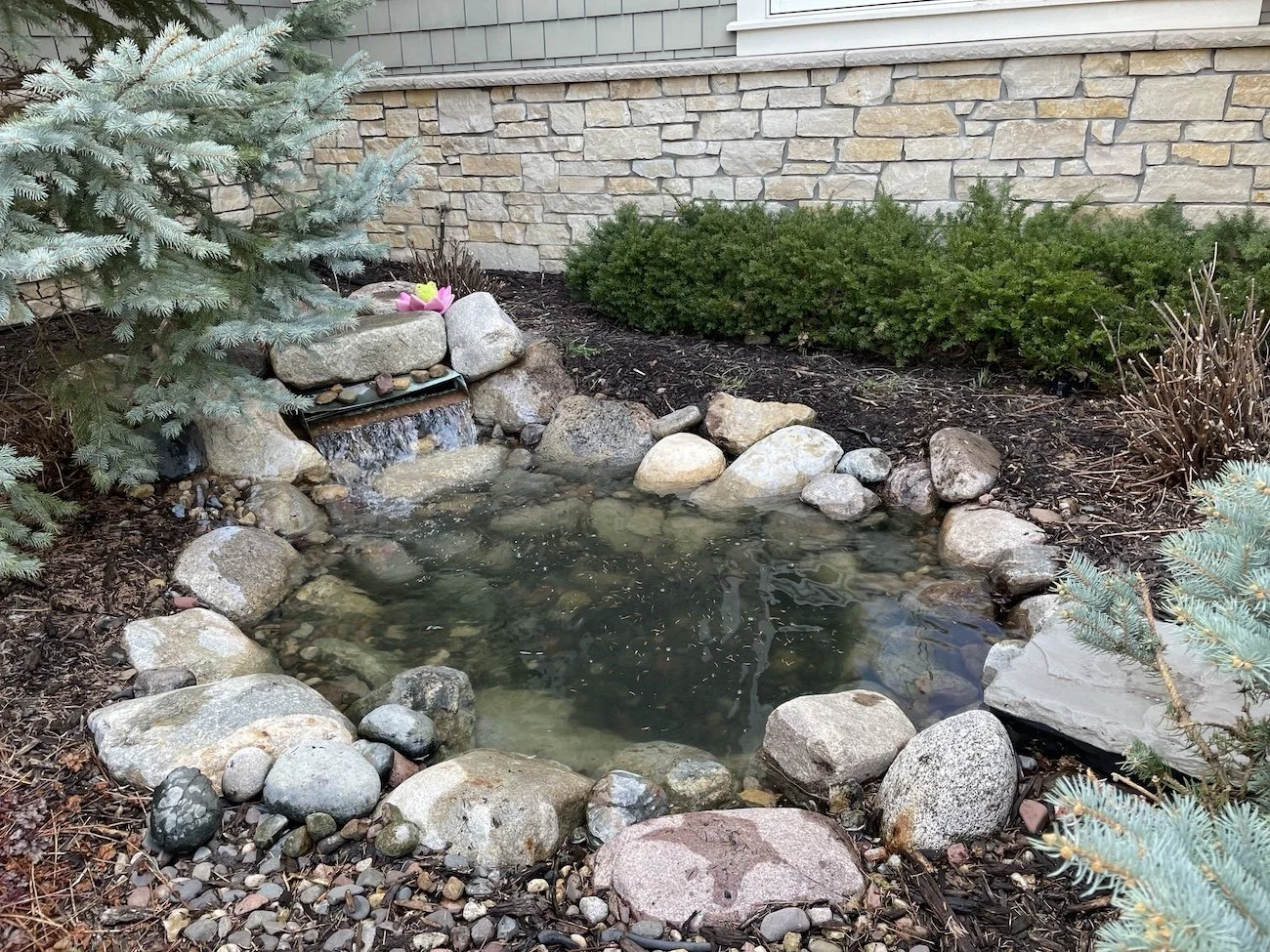
Cleaning a pond or water feature is crucial for health, aesthetics, and function. It removes harmful debris, algae, and parasites, which prevents oxygen depletion, disease for fish, clogged pumps, and nutrient buildup. This ensures a balanced ecosystem and clear, beautiful water for plants, wildlife, and enjoyment. Neglect leads to murky water, sick inhabitants, and costly equipment failure, making regular cleaning essential for a vibrant feature.
Cleaning a water feature should occur every spring once the ice has fully melted and the ground has thawed. Below is our checklist to clean and prepare your water feature for the upcoming season.
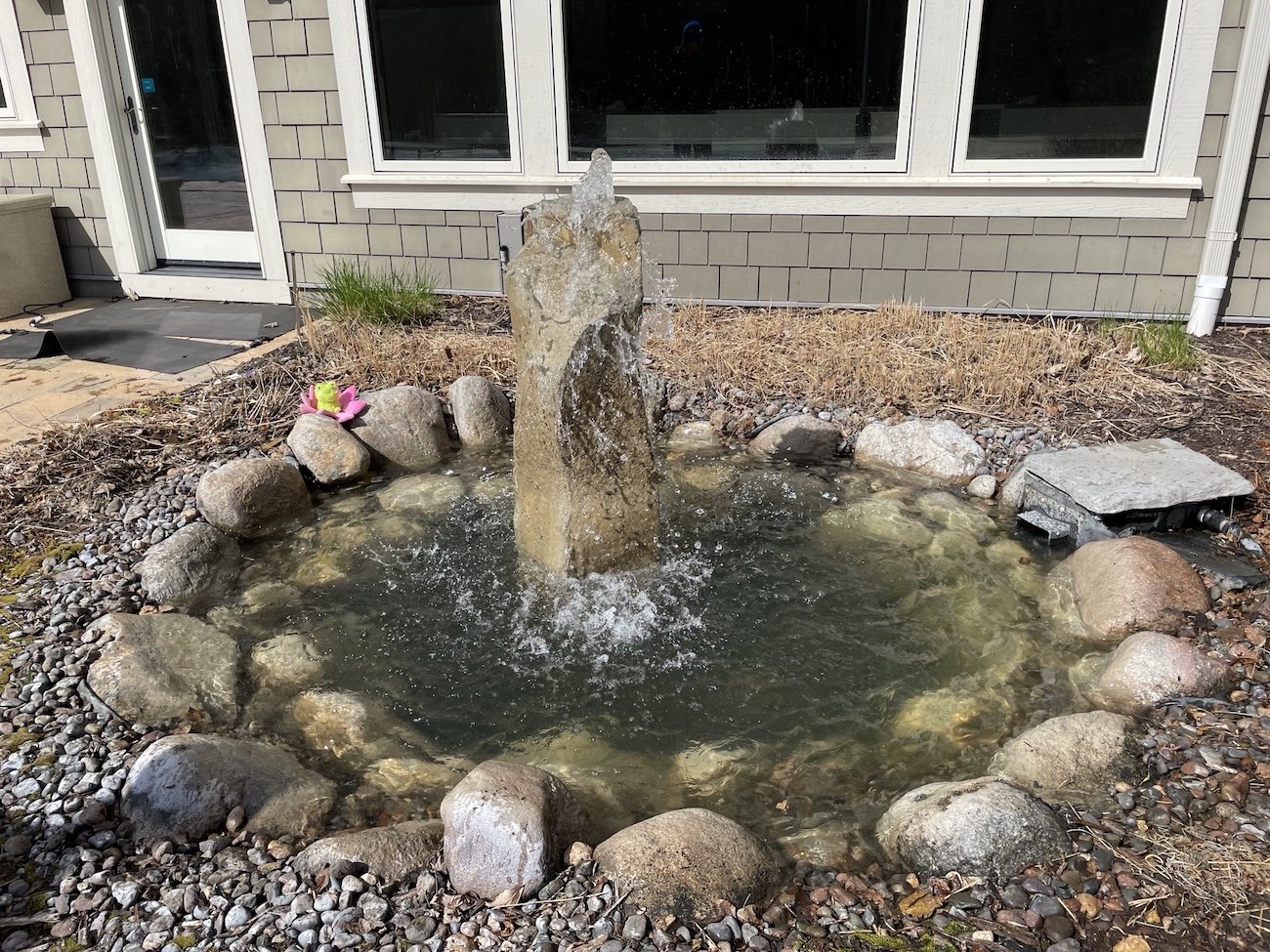
Spring Water Feature Cleanout & Start Up Process:
Pump out existing water: we use a 2” discharge pump with vinyl hose to remove the water.
Manually remove and bag leaf debris: we will typically place two 5-gallon pails of debris in a thick garbage bag to be transported to the compost site. Otherwise, the debris is fantastic for compost.
Rinse entire water feature while pump discharges bad water: a garden hose with a spray nozzle is then used to rinse the entire water feature from the top down. During the rinsing process the discharge pump is placed in the lowest point of the water feature and is pumping out the dirty water and organic sludge.
Power wash boulders and rocks: it’s important to wear safety goggles or a face shield to protect your eyes and face. Wearing rain pants and a rain jacket is also a must.
Rinse entire water feature a second time while pump discharges bad water: the algae that was blasted off the boulders with the power washer now needs to be rinsed to the bottom of the water feature (pond) and pumped out.
Clean skimmer box, skimmer box filters/net/basket and clean headwaters: a small 1/3 horsepower pump connected to a garden hose works wonders.
Remove and discard dead animals: unfortunately the removal of dead fish, mice, voles, moles rats, squirrels, possums, frogs, turtles and so forth are part of the process.
Test pump to make sure it discharges water properly: prior to installing the pump(s) to the hoses they should be tested in a 5-gallon pail of water to ensure they are in proper working order.
Assemble pump back onto hose in skimmer or pump vault: most pumps are attached to a hose with a threaded collar or rubber coupler with hose clamps.
Fill up water feature with new water: water features are filled using a garden hose and if the pond is large a healthy dose of patience.
Add dechlorinator and start up bacteria to new water: if the pond will contain fish, which are removed and placed in a stock tank during the cleanout, and the house is supplied by city water, dechlorinator will need to be added to make the water safe for fish. Adding beneficial bacteria to the water feature is essential to create balance ecosystem.
Visually inspect water feature when running: once the pond is cleaned and running it’s important to visually inspect the water feature. Keep an eye out for water existing the system and for any potential repairs.
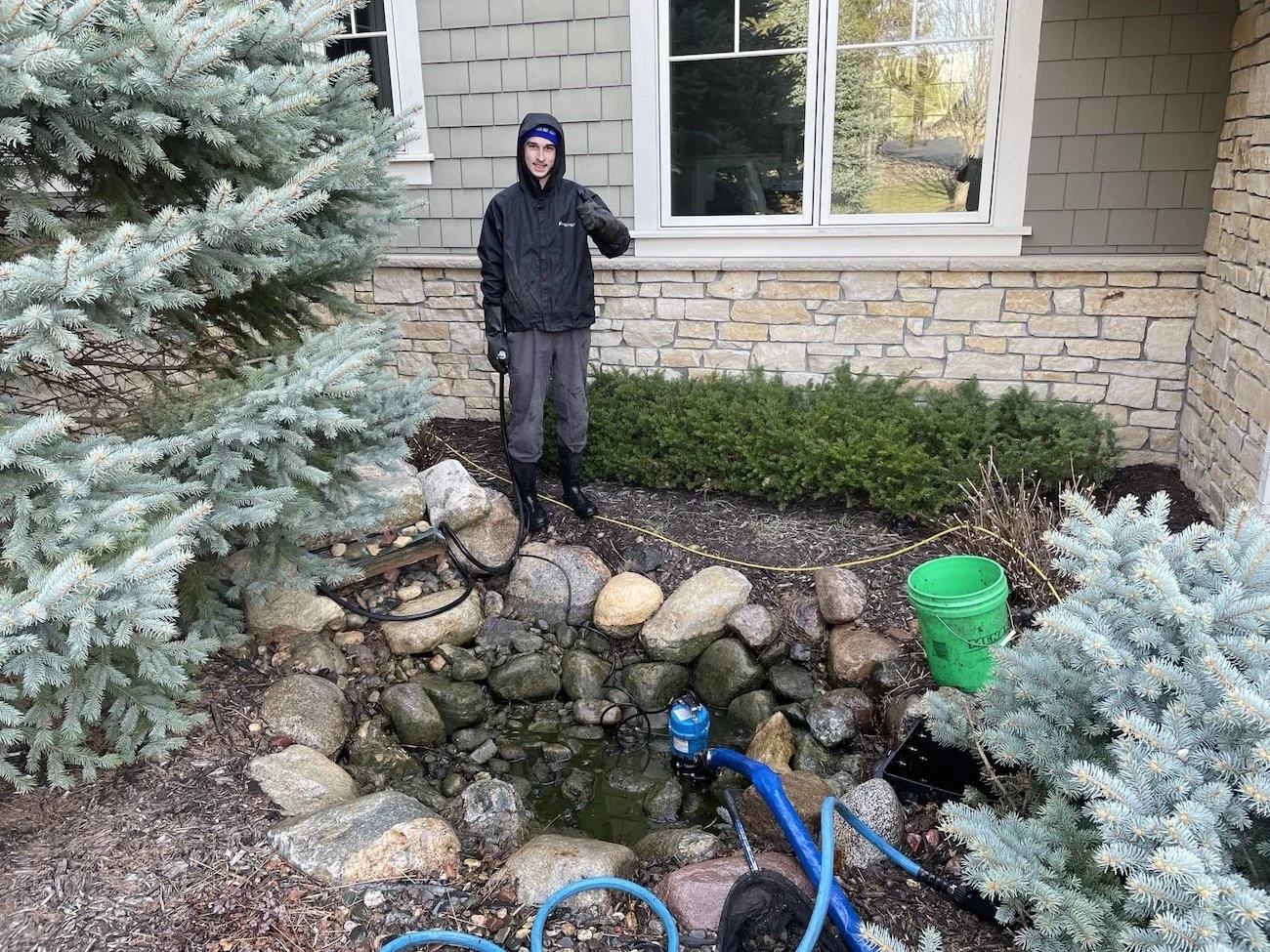
Pumping out existing water
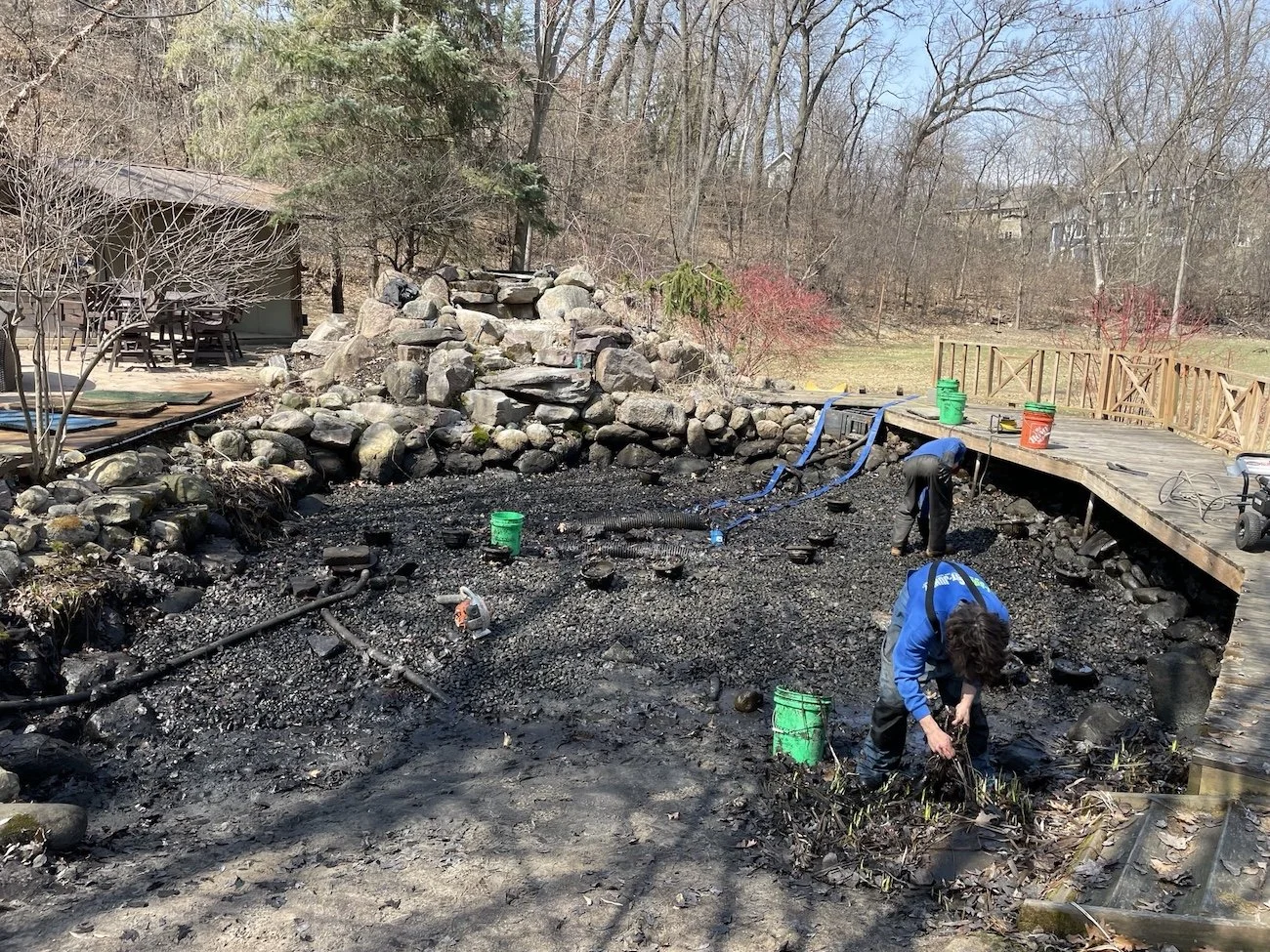
Manually removing debris
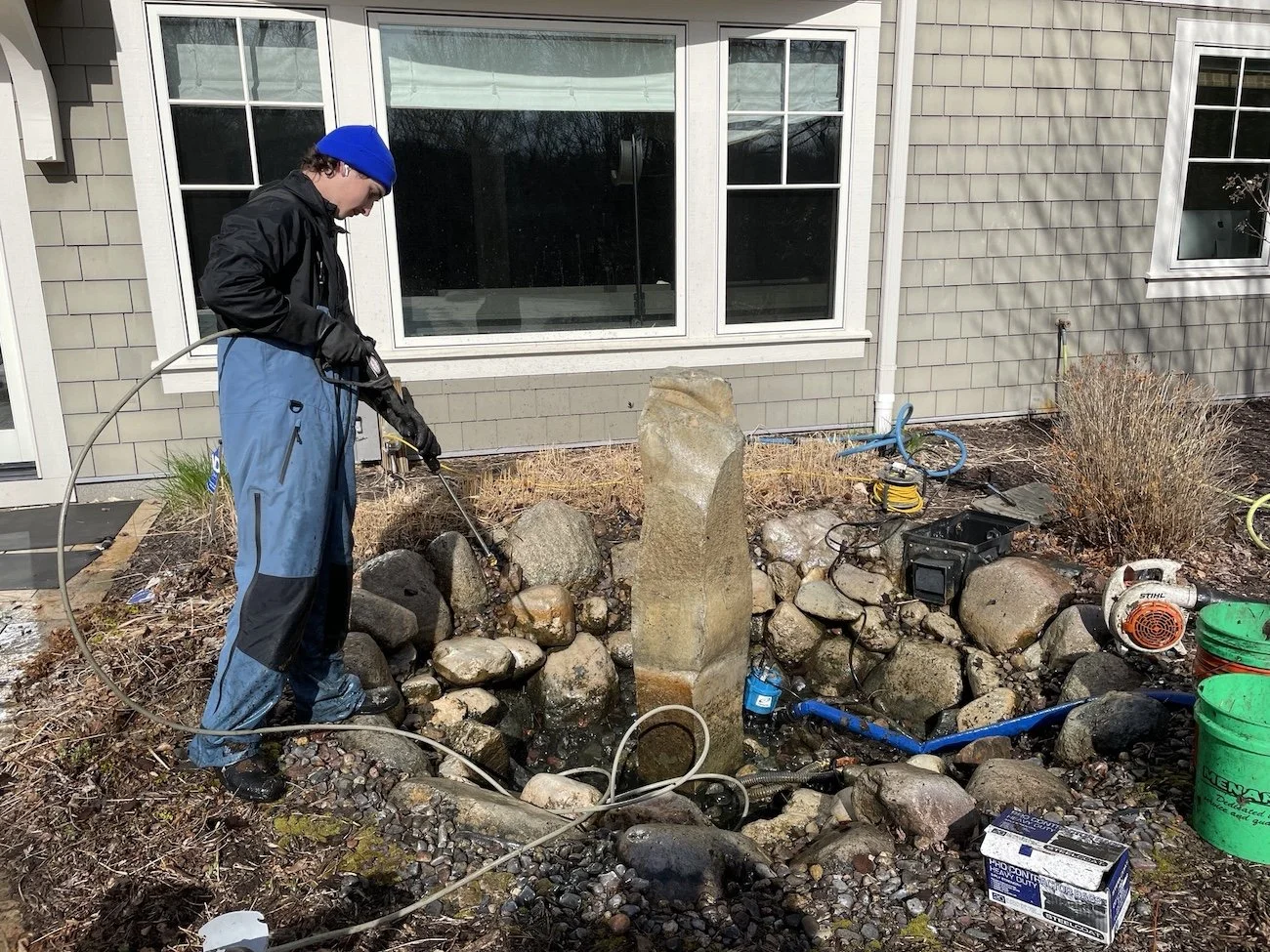
Power washing rocks
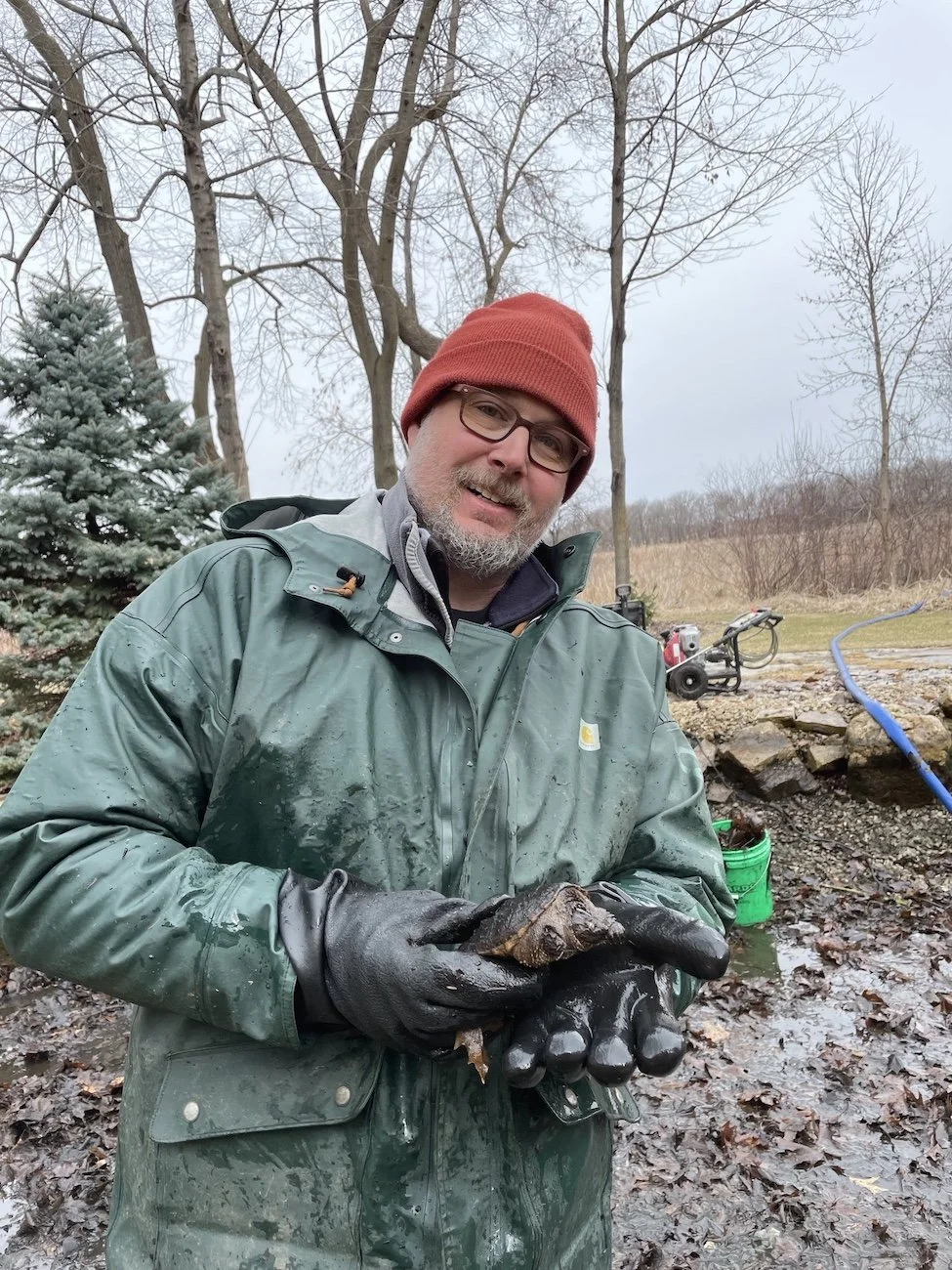
We found a turtle while cleaning
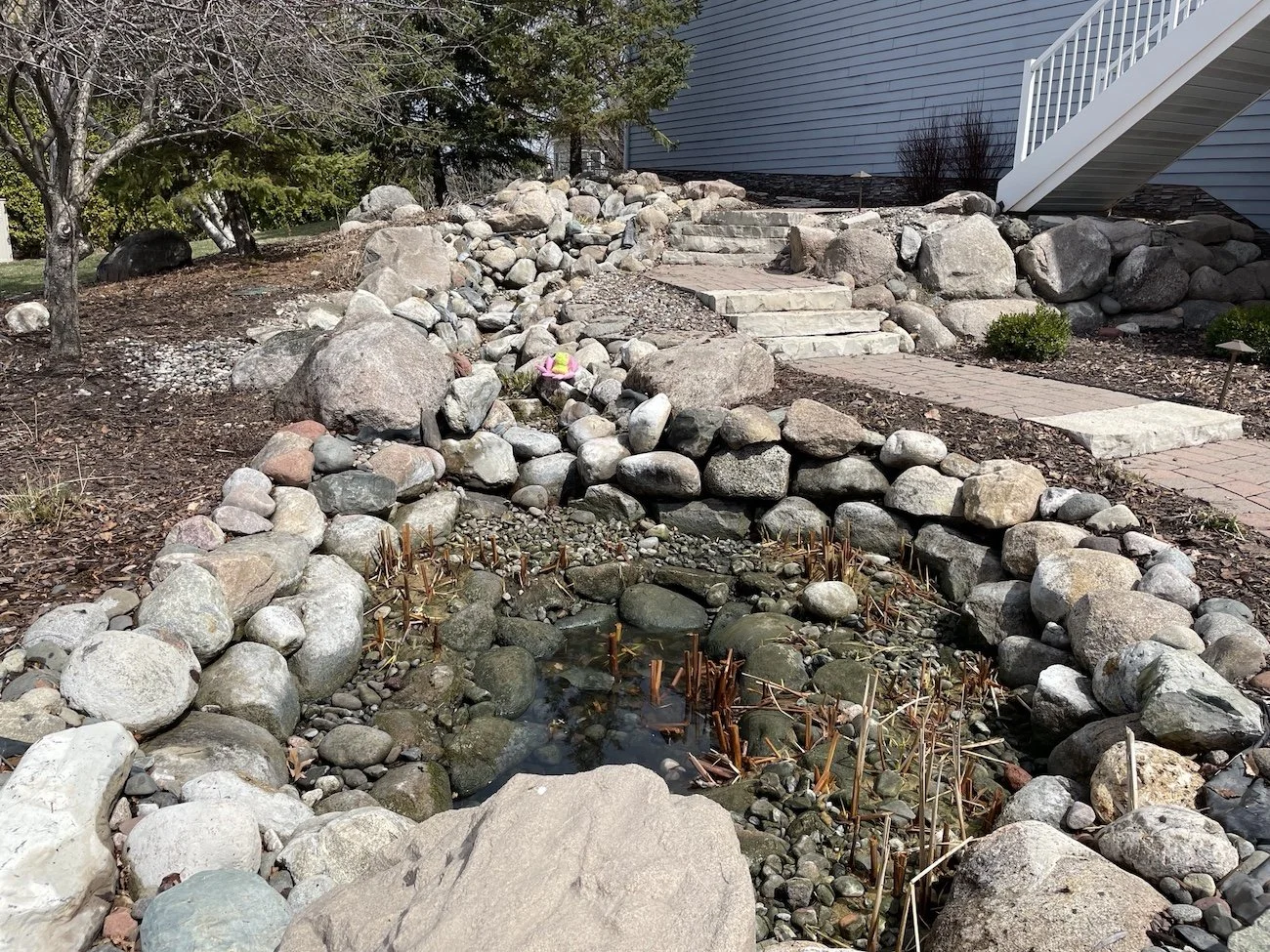
Want to sit back and relax while the professionals clean out your pond to prepare for the spring? Sign up for our Spring Pond Cleanouts to get to relaxing.